
The Real Reason for Crepey Hands in Perimenopause (And How to Fix It)
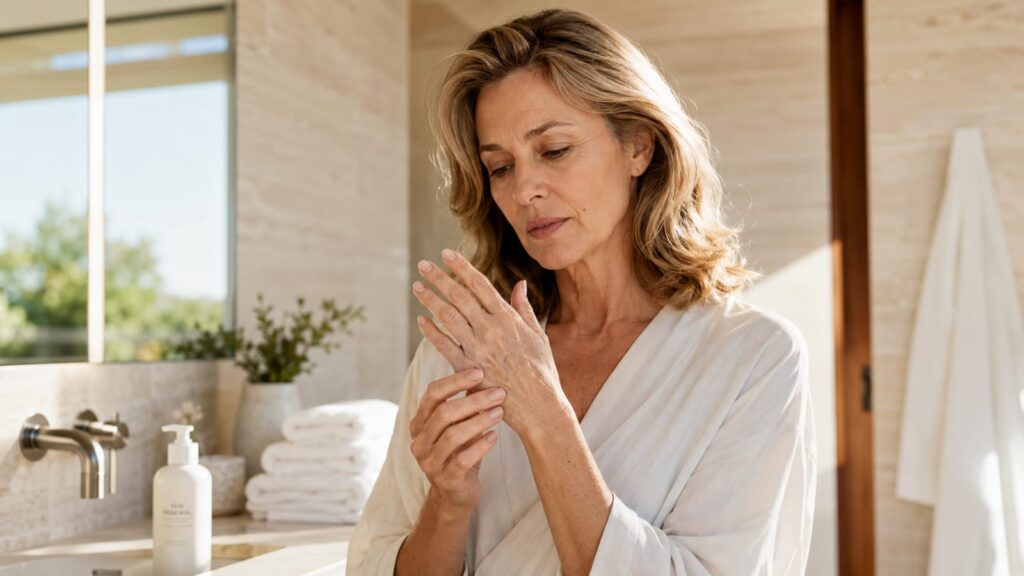
Washing your hands shouldn't leave them feeling raw, scaling, and visibly thin. If you have noticed a sudden shift toward dry, crepey hands in perimenopause, you are definitely not alone. This abrupt change is a direct result of internal hormonal shifts that rapidly deplete your skin of its natural structural support.
The short answer: Crepey skin on the hands during midlife occurs because dropping estrogen levels trigger a 30% loss of skin collagen in the first five years of menopause. To restore smoothness, switch to rich, fragrance-free ointments containing lipids like shea butter and jojoba oil, which seal the compromised skin barrier and prevent deep moisture loss.
You look down at the steering wheel or catch a glimpse of your hands while typing, and they suddenly look unfamiliar. The skin on the backs of your hands feels paper-thin, tight, and painfully dry after routine hand washing. It feels as though no matter how much lotion you pump from the bottle on your desk, the moisture disappears within minutes.This is not standard winter dryness that a basic drugstore lotion can solve. Instead, the skin looks cross-hatched and delicate, almost like fine tissue paper. It can be deeply frustrating to watch your hands change so quickly when your regular routine worked perfectly for years.
Please know that this change is not a failure of your skincare routine or a sign that you did something wrong. It is entirely biological. Your skin is reacting to an internal shift, and the products designed for your thirty-something skin simply cannot keep up with what your skin barrier requires right now.
Why This Is Happening: The Science of Crepey Hands in Perimenopause
During the perimenopausal transition, which often begins several years before your final period, your hormone levels fluctuate and drop significantly. This hormonal decline directly impacts the deeper layers of your skin, disrupting the cells responsible for keeping your skin plump and resilient.
According to the American Academy of Dermatology, skin loses about 30% of its collagen during the first five years of menopause. The AAD also notes that during this phase, your skin loses its ability to hold water, making it thin, slack, and highly susceptible to severe dryness.
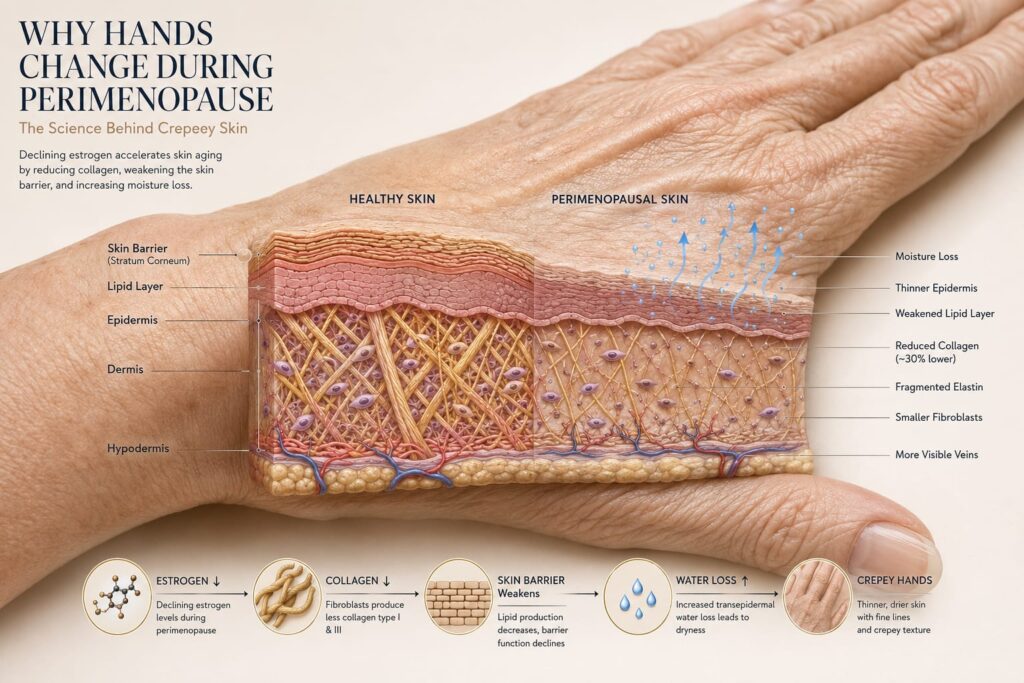
What is the skin barrier? The skin barrier is the outermost layer of your skin, composed of lipids and skin cells that lock moisture in and keep irritants out. In midlife, this protective shield thins out and heals more slowly, leading to chronic dehydration.
A narrative review in the Journal of Cosmetic Dermatology notes that the decline in estrogen during menopause impairs collagen production and the integrity of the extracellular matrix. This structural failure leads directly to thinning, dryness, scaliness, and a prominent loss of elasticity. Additionally, the Cleveland Clinic explains that dropping estrogen levels literally suck moisture from your skin, making the barrier more vulnerable to daily irritation.When your skin barrier is compromised, it becomes highly reactive.
To help visualize this shift, here is how changing hormone levels alter your skin architecture:
| Skin Component | Role in Skin Health | Impact of Midlife Hormonal Decline |
| Collagen Production | Provides structural firmness | Drops by roughly 30% in early menopause |
| Hyaluronic Acid | Retains deep moisture | Declines sharply, causing surface scaliness |
| Lipid Barrier | Prevents water evaporation | Thins out, leaving skin raw and sensitive |
| Cell Turnover | Renews skin surface | Slows down, leading to a rough, crepey texture |
Why Your Current Creams are Failing Your Hands
If you are slathering on standard, water-heavy lotions and wondering why your skin still feels raw ten minutes later, the answer lies in the formula. Most mass-market lotions are formulated with high water content and light humectants that evaporate off the skin almost instantly.
Here are the specific habits and product types that fail to help dry hands over 40:
- Water-heavy standard lotions: These feel refreshing initially but lack the dense lipids required to lock in moisture, causing rapid evaporation.
- Synthetic fragrance and essential oils: Compromised, thin skin reacts easily to added perfumes, which can cause burning, redness, and micro-inflammation.
- Harsh anti-bacterial soaps: Frequent washing with stripping surfactants removes the tiny amount of natural sebum your hands still produce.
- Skipping heavy evening occlusives: Thin skin loses moisture rapidly overnight, meaning your hands require a dedicated lipid shield while you sleep. This post contains affiliate links; if you buy through them, GlowAfter40 may earn a small commission at no extra cost to you.
What Actually Helps Restore Skin Elasticity
To truly support your skin during this transition, your strategy needs to shift from temporary hydration to deep barrier reinforcement. This means utilizing a heavy-duty, fragrance-free moisturizer loaded with plant-derived oils, rich butters, and targeted active ingredients. Let’s review four highly curated, fragrance-free options available on Amazon that have under 5,000 purchases, ensuring you get high-integrity, niche solutions rather than over-hyped mass market formulas.
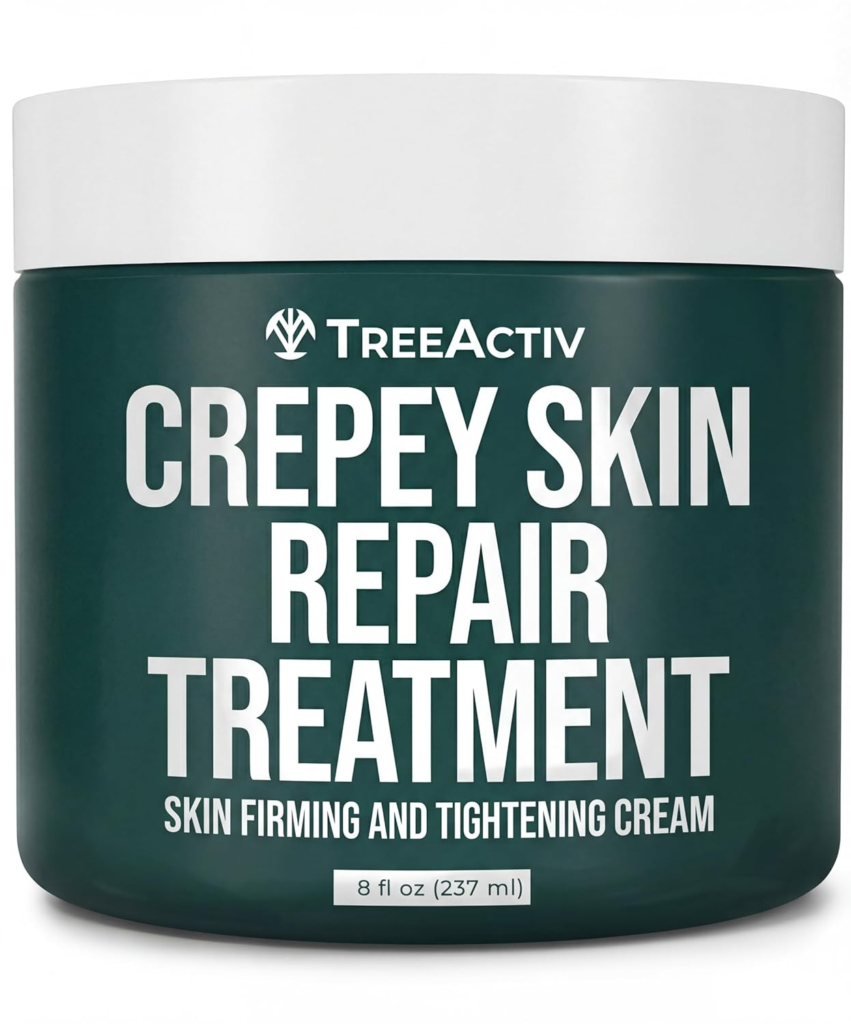
1. A body and neck firming cream If your skin feels perpetually deflated and dry, this thick firming cream provides the dense structural support your hands are craving. It blends glycolic acid and hyaluronic acid to gently smooth out cross-hatched lines while delivering deep hydration through a rich shea butter base. It fits women looking for intensive surface smoothing, though its rich texture is best suited for overnight use rather than a quick daytime application.
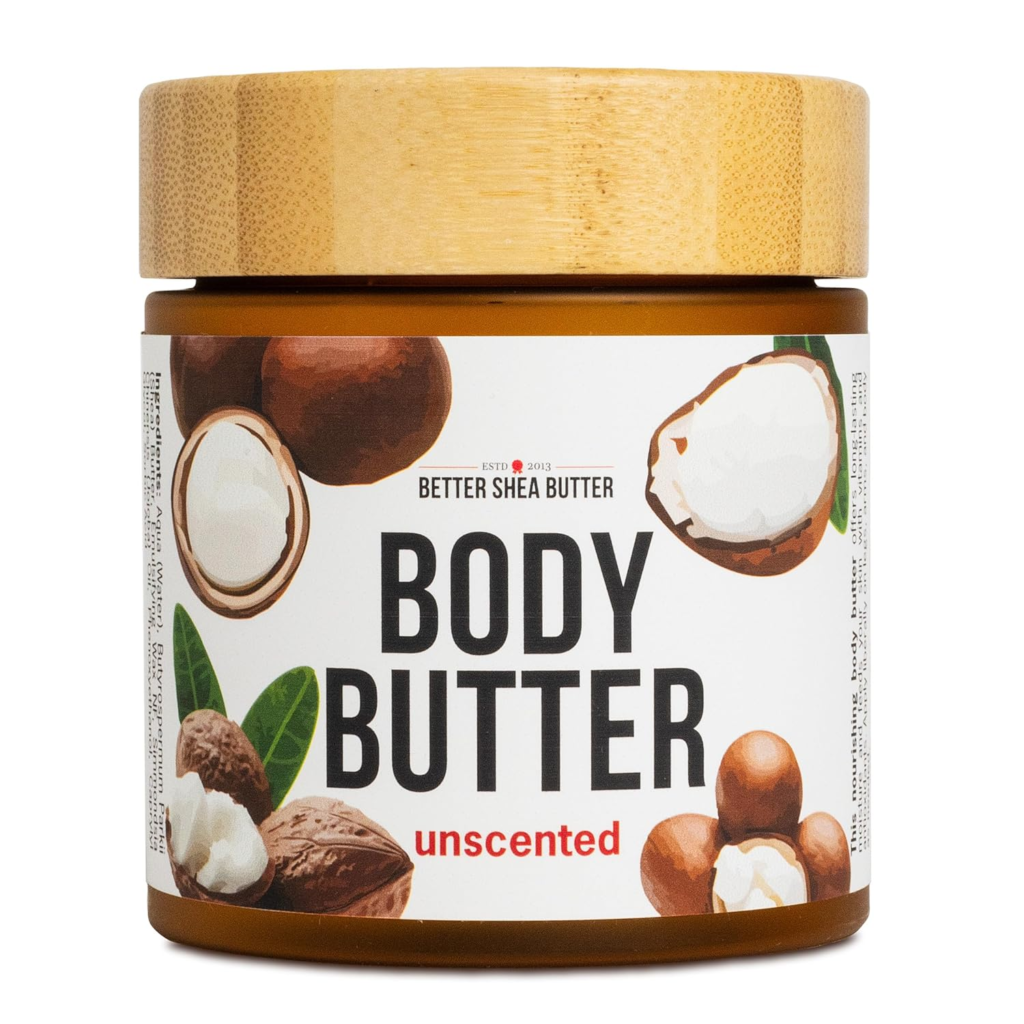
2.A raw lipid replenishing body butter
If you want to escape the constant cycle of reapplying lotion every hour, this pure lipid balm creates a protective shield that won’t wash away easily. It utilizes raw shea butter and jojoba oil to mimic the natural oils your skin barrier has stopped producing. It fits women who prefer minimalist, chemical-free formulas, but it does take a few minutes to fully melt into the skin.
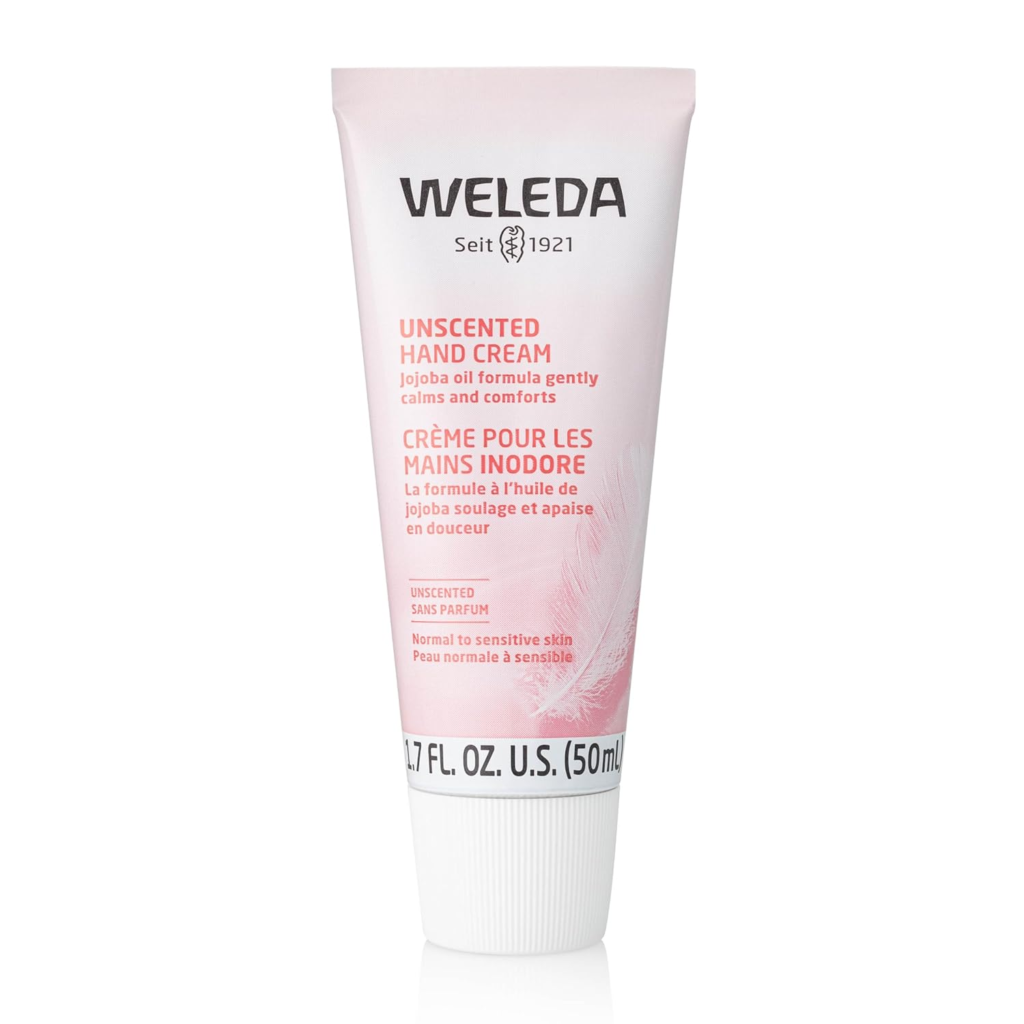
3.A natural daily hand protection cream
If your hands sting or turn red the second you apply standard lotions, this ultra-gentle formula provides immediate, irritation-free relief. Formulated with jojoba oil, borage oil, and organic coconut oil, it targets intense dryness without relying on heavy synthetic chemicals. It fits perfectly into a daytime handbag for frequent use, though the smaller tube size means you may go through it quickly.
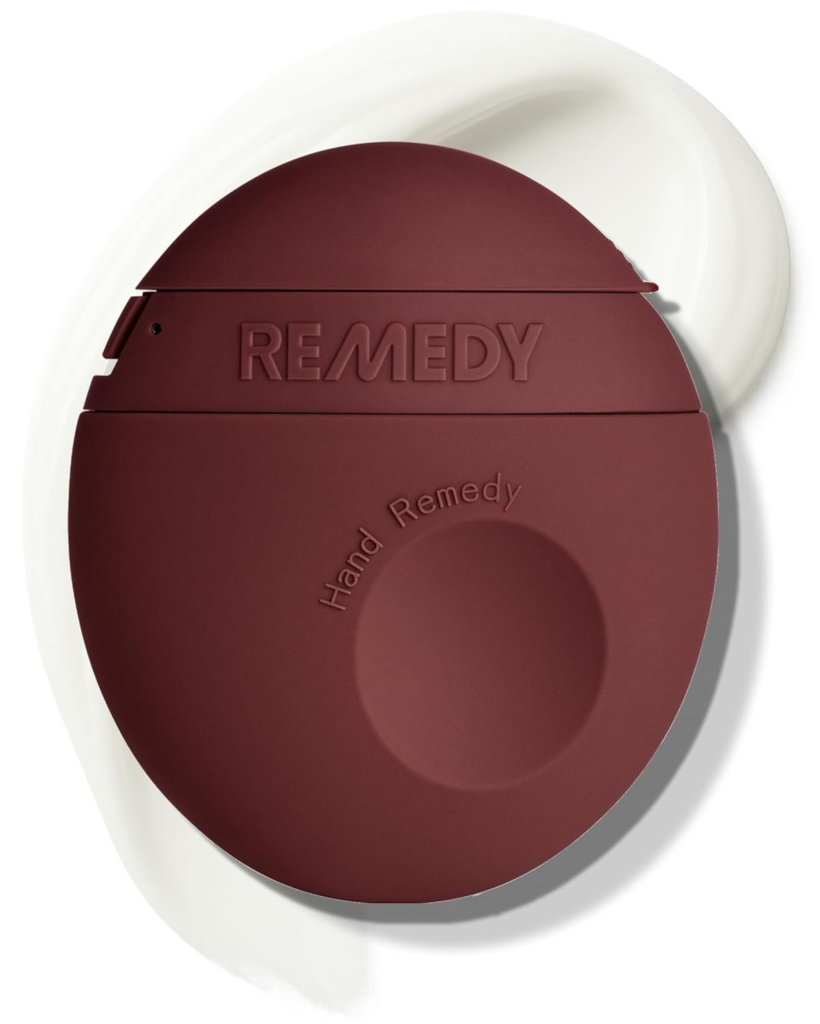
4. A dermatologist-developed repairing hand cream
If you want to actively target the loss of thickness and resilience on the backs of your hands, this specialized ointment delivers dermatological actives without the typical irritation. Developed by Dr. Shah, it pairs encapsulated retinol with triple ceramides and a 20% shea butter base to support natural collagen production. It fits women wanting focused midlife skin support, though you should introduce it gradually at night to let your skin adapt to the retinol.
Your Realistic Timeline for Skin Recovery
Rebuilding a compromised barrier and supporting thinning skin requires patience. Your skin cells renew at a slower rate during this life stage, meaning changes happen in phases rather than overnight.
Here is what you can realistically expect when using a targeted moisturizer for menopausal skin:
| Timeline Phase | Surface Comfort | Structural Integrity | What is Happening Beneath |
| Week 1 | Immediate relief from raw stinging | Surface flakes begin to soften | The moisture barrier stops losing water |
| Week 2 | Skin stays comfortable between washes | Rough patches become smoother | Lipids accumulate in the stratum corneum |
| Week 4 | Crepey texture looks noticeably softer | Redness and reactivity decline | Natural lipid layers begin to stabilize |
| Week 8 | Hands look visibly smoother and plumper | Skin feels more resilient and less thin | Cellular matrix support is reinforced |
It is important to manage expectations during this process. Your skin will not become the exact texture you had in your twenties. What it will become is deeply hydrated, comfortable, smooth, and far more resilient against daily wear and tear.
Frequently Asked Questions About Menopausal Hand Care
Why does standard hand cream stop working during perimenopause? Standard hand lotions rely on high water content that quickly evaporates into the air if your skin lacks the lipids to lock it in. During this transitional phase, the deep drop in natural oils means your skin requires dense butters and barrier-replenishing occlusives rather than simple hydration.
Can a retinol cream really help the skin on my hands? Yes, when formulated carefully with a rich, protective base like shea butter or ceramides to prevent irritation. Retinol supports natural surface cell renewal and helps maintain structural support, which directly addresses the thinning that causes a crepey appearance.
How often should I apply these heavy-duty creams? You should apply a protective balm immediately after every single hand washing while your skin is still slightly damp. For deep repair, apply a thick layer of a lipid-rich cream right before bed to allow the ingredients to work uninterrupted overnight.
A Simple Step You Can Take Tonight
You can start protecting your skin barrier immediately without waiting for a total routine overhaul. Before you turn off the lights tonight, leave your hands slightly damp after your evening wash, apply a generous layer of a fragrance-free moisturizer, and let it absorb fully while you sleep.
Our skin goes through massive structural changes during this time, but matching those changes with specialized, lipid-dense support ensures your hands stay comfortable and protecte