
Hair Shedding or Hair Thinning? What’s Really Happening During Menopause
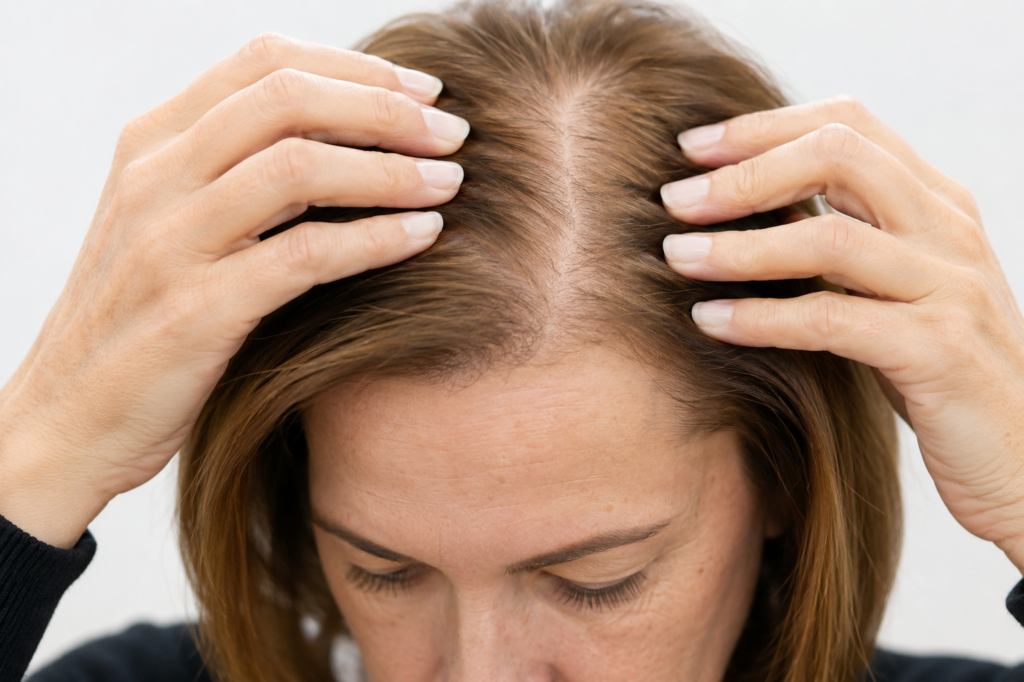
Gathering your hair into an elastic only to find it wraps around three or four times instead of two is a quiet, jarring shock — but before you assume the worst, it’s worth asking a more specific question is your hair actually shedding more, or is it genuinely getting thinner? These two things feel similar day to day, but they are not the same problem, and they don’t call for the same solution.
Shedding refers to hair falling out in larger amounts than usual — more strands in your brush, in the shower drain, on your pillow. This is often temporary and tied to a specific trigger: a stressful period, an illness, a change in medication, or hormonal fluctuation. It’s medically known as telogen effluvium, and in most cases, the hair grows back once the underlying trigger resolves, usually within a few months.
You notice it first in the shower drain, then on your bathroom floor, and finally when you try to style your favorite clip. The fullness that used to define your look feels depleted, leaving behind a widening part line or a visibly smaller ponytail. It is frustrating to feel like your body is rewriting the rules without your permission. You might find yourself switching parts, buying volumizing sprays that leave your scalp feeling sticky, or avoiding bright overhead lighting altogether. Here’s the thing—this drop in volume is not a personal failure, and it is not because you used the wrong shampoo or aged poorly. It is a biological transition that affects nearly two-thirds of women after midlife, driven by clear, measurable shifts in your internal environment. You did nothing to cause this, and you do not have to just accept it.
The Biological Shift Behind Thinning Hair During Menopause
To address the change, we have to look at what is happening beneath the scalp. As reproductive hormones shift, your ovaries produce less estrogen, which previously acted as a protective shield for your hair follicles.
According to the American Academy of Dermatology, this shift frequently unmasks a genetic sensitivity known as female pattern hair loss. Without robust estrogen levels, weaker male hormones like dihydrotestosterone (DHT) exert more influence on your scalp, causing follicles to shrink.
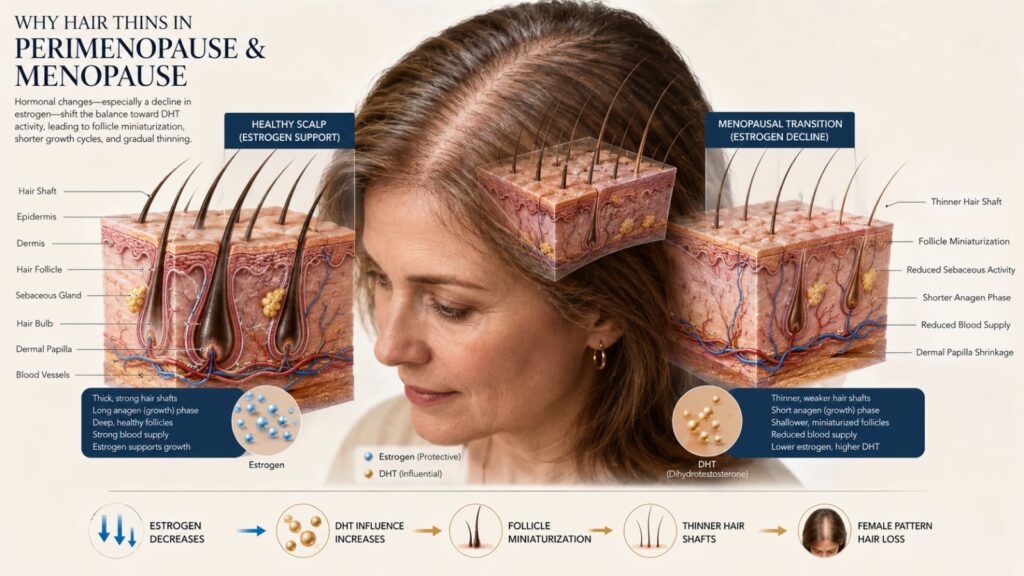
What is DHT miniaturization? It is the process where male hormones cause your hair follicles to shrink over time. As follicles constrict, they produce thinner, shorter strands until they stop producing hair entirely.
This hormone drop shifts more hairs out of the active growth phase and into the shedding phase simultaneously. But hormones are only one piece of the puzzle; nutritional status plays an equally vital role. A clinical review published in the Iranian Journal of Dermatology notes that maintaining proper ferritin levels is essential for keeping hair in its active growth phase. When your iron storage drops, your body rations its remaining iron for vital organs, leaving your scalp starved of the nutrients needed for optimal growth.
| Factor | Biological Effect | Visual Result |
| Estrogen Drop | Shortens the active growth phase | Faster hair shedding |
| DHT Increase | Miniaturizes individual hair follicles | Finer, thinner hair strands |
| Low Ferritin | Restricts cellular energy in roots | Diffuse volume loss |
Why Your Old Routines Fail for Thinning Hair During Menopause
The real frustration is that traditional thickening shampoos, biotin gummies, and heavy scalp oils simply cannot fix a cellular issue. Deep conditioning treatments can coat the outside of a strand to give a temporary illusion of fullness, but they do nothing to revive shrinking hair follicles.
- Biotin supplements: They only help if you have a severe, rare biotin deficiency; otherwise, excess biotin is simply flushed out of your body.
- Heavy scalp oils: Rubbing thick oils onto a thinning scalp can clog follicles and weigh down existing hair, making your ponytail look even smaller.
- Volumizing sprays: These products use drying alcohols to lift the hair shaft, which can dehydrate an already sensitive midlife scalp and cause breakage.
Proven Dermatologist Solutions to Restore Hair Density
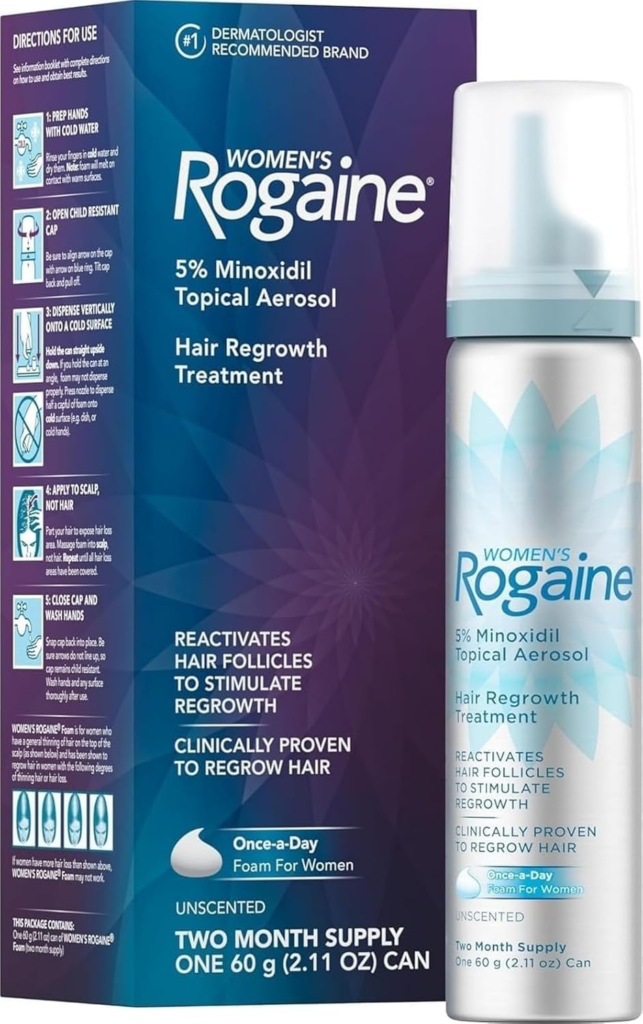
1.Women’s ROGAINE® 5% Minoxidil Unscented Foam
If you feel completely defeated by a widening part line every time you look in the mirror, this targeted topical solution offers a proven way back to thicker hair. It works directly at the root by widening blood vessels and extending the active growth phase of your hair follicles. This option fits women who want an FDA-approved treatment to actively reverse follicle shrinking. One honest limitation is that you must use it consistently every single day, and an initial temporary increase in shedding can occur during the first few weeks as old hairs make way for new growth.
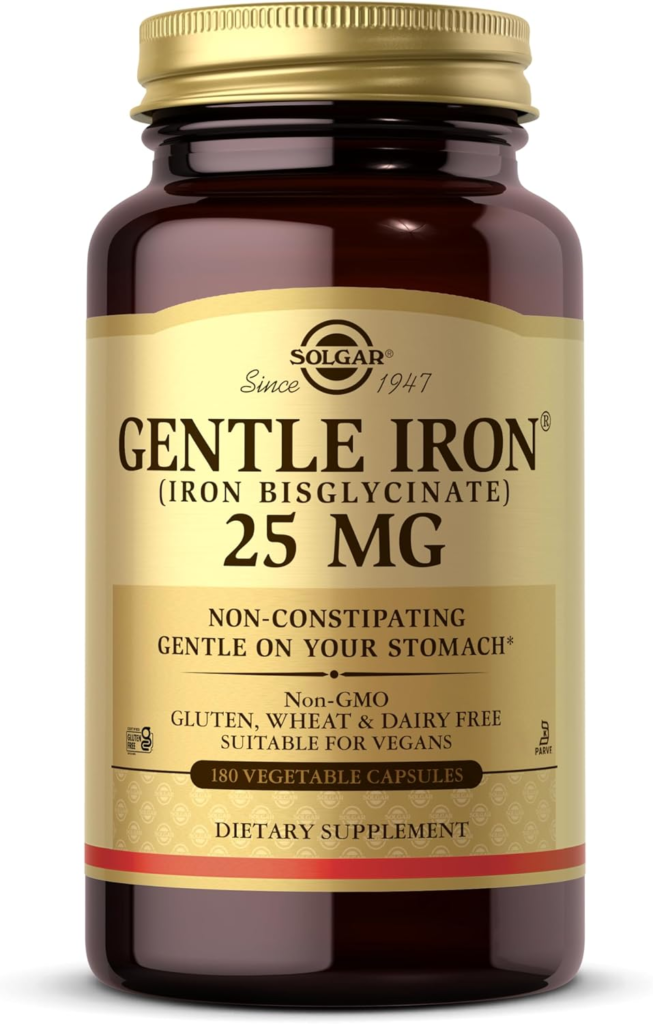
2.Solgar Gentle Iron 25mg (Iron Bisglycinate) Watching clumps of hair accumulate in your hairbrush can make you feel desperate for an internal fix that will not upset your stomach. This highly absorbable, chelated formula delivers vital elemental iron directly to your system without the digestive distress common in standard supplements. It fits women who need to safely optimize their ferritin levels to support the metabolic demands of the hair growth cycle. An honest limitation is that building up nutrient stores takes time, and you should always have a doctor check your blood levels first to confirm your exact dosing needs.
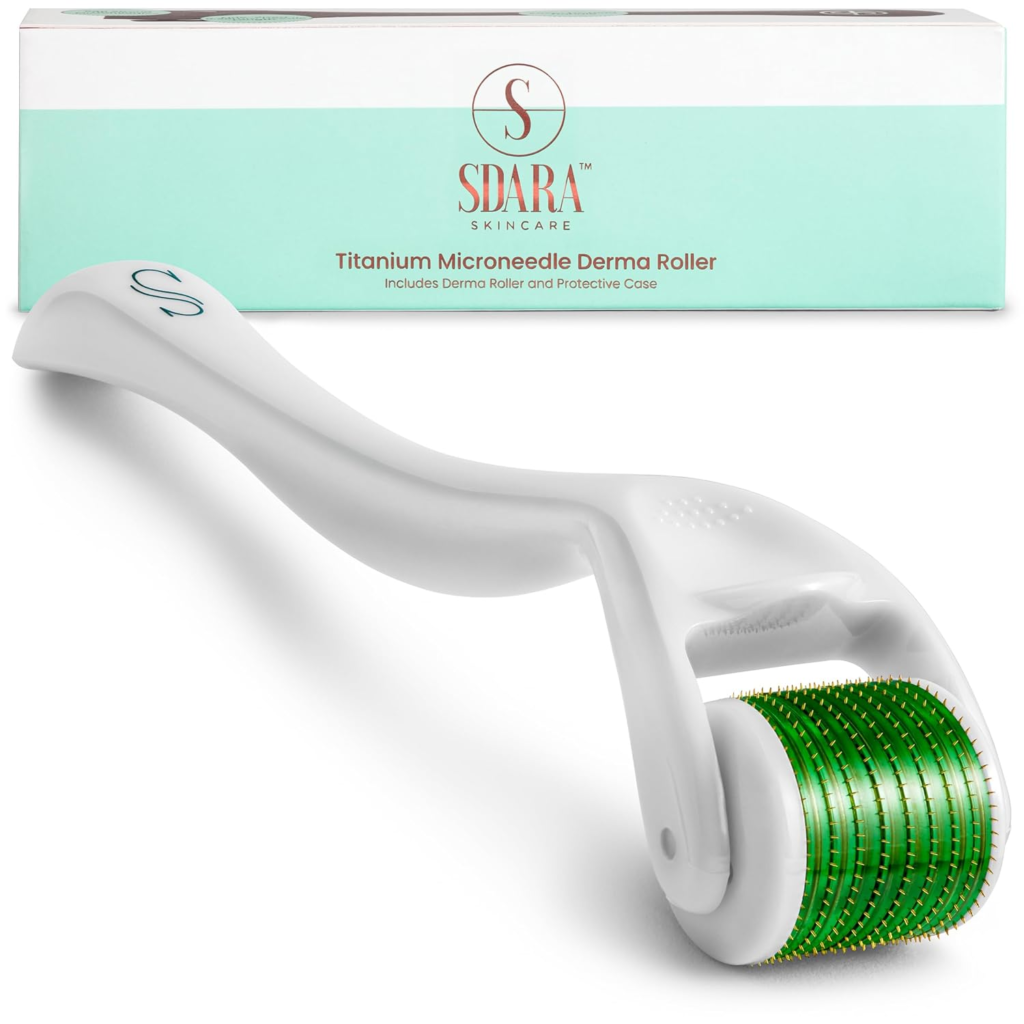
3.Sdara Skincare Derma Roller
When your topical treatments feel like they are just sitting on top of your scalp instead of absorbing, mechanical stimulation can open up the pathway. This home care tool uses tiny titanium microneedles to boost local circulation and enhance the penetration of your daily scalp serums. This device fits women looking to maximize the overall efficacy of their topical treatments while encouraging better scalp health. An honest limitation is that it requires incredibly gentle pressure to avoid scratching the skin, and you must sanitize it meticulously before and after every use to avoid infection.
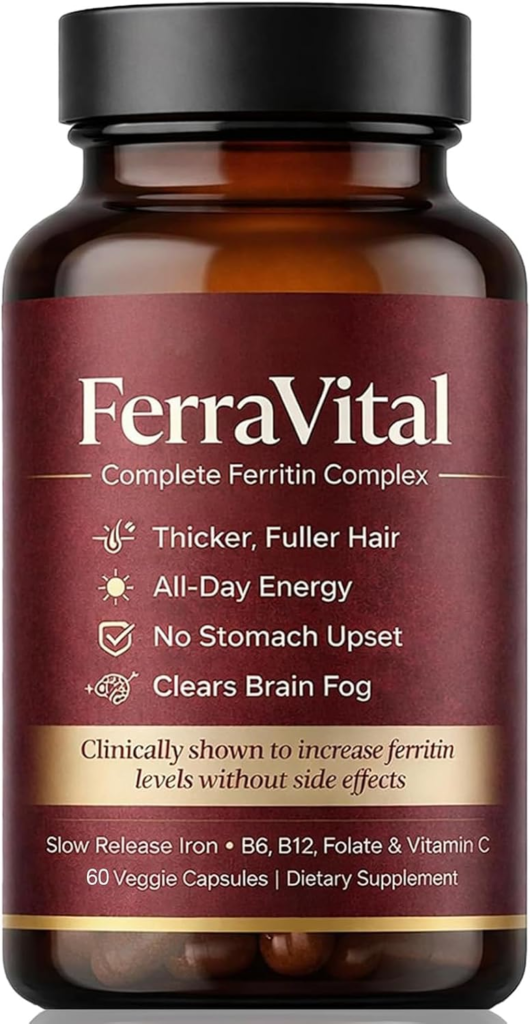
4.FerraVital Ferritin Support Iron Supplement
If standard vitamins are not moving the needle on your diffuse shedding, a blend engineered specifically for hair health can provide more precise support. This capsule combines highly bioavailable iron with synergistic cofactors like Vitamin C and B6 to maximize absorption at the cellular level. It fits women seeking a comprehensive, hair-focused approach to correct persistent ferritin deficiencies linked directly to midlife thinning. An honest limitation is that it carries a higher price point than basic iron tablets, requiring a dedicated budget for daily long-term use.
What to Expect: A Realistic Growth Timeline
Restoring density is a journey of patience, as your follicles require time to transition out of their resting state.
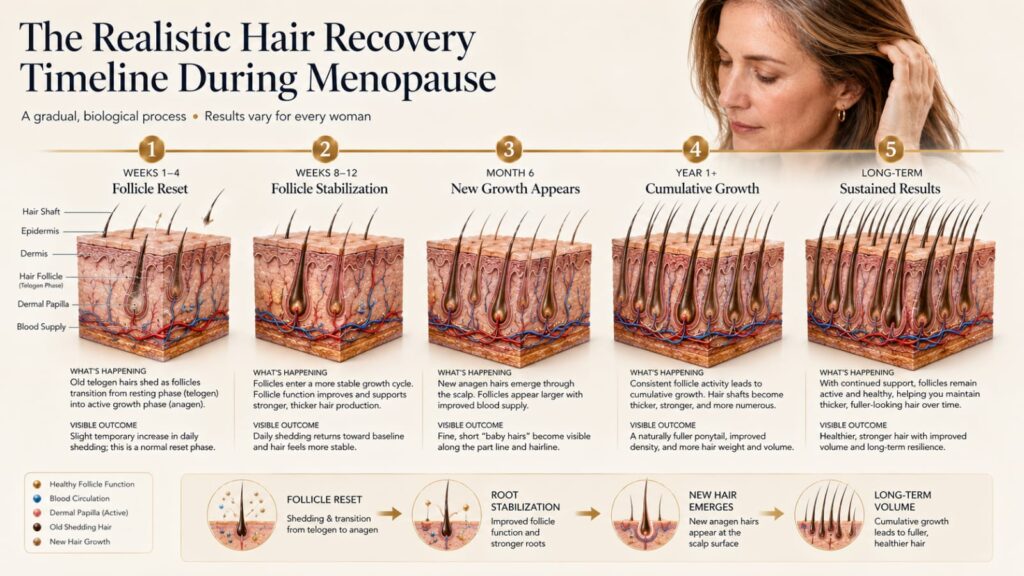
| Phase | Scalp and Strand Changes | What You Will Observe |
| Weeks 1–4 | Follicles reset; old strands clear out | Potential slight increase in daily shedding |
| Weeks 8–12 | Miniaturization halts; roots stabilize | Normalizing shed levels and baseline stability |
| Month 6 | New strands reach the surface | Fine, short new hairs along the part line |
| Year 1+ | Cumulative growth builds volume | A noticeably denser, weightier ponytail |
Now, let’s reframe how we view this process. It will not become an instantaneous overnight transformation that completely recreates your twenty-year-old texture. What it will become is a steady, measurable improvement in thickness and scalp coverage that restores your confidence.
Common Questions About Midlife Volume Loss
Why does my scalp feel more sensitive or visible as my hair thins?
As follicle density drops, your scalp loses some of its natural physical protection from UV rays and environmental shifts. And the same hormone changes that thin your strands can dry out the skin on your head, leading to mild tightness or reactive sensitivity.
Can lifestyle changes alone fix this type of hair thinning?
While stress reduction and a balanced diet support overall wellness, they cannot override genetic sensitivities or severe hormonal drops on their own. Combining a healthy lifestyle with targeted clinical ingredients yields the most reliable results.
How do I know if my hair loss is temporary or permanent?
Shedding triggered by sudden stress or temporary nutrient deficits usually corrects itself within six months of removing the trigger. But thinning that follows a distinct pattern along your part line is typically progressive and requires ongoing intervention to maintain densit
Your Simple Next Step Tonight
Instead of spending hours scrolling through contradictory forums or feeling anxious about the hair left on your brush, commit to one concrete action before bed. Schedule a simple blood panel with your doctor to check your iron, ferritin, and thyroid levels so you can build your recovery plan on exact data. Taking charge of your biological data replaces confusion with clear.
Explore More Articles on Hair Care Over 40:-