
Menopause Hair Loss Solutions: Ingredients & Products That Work
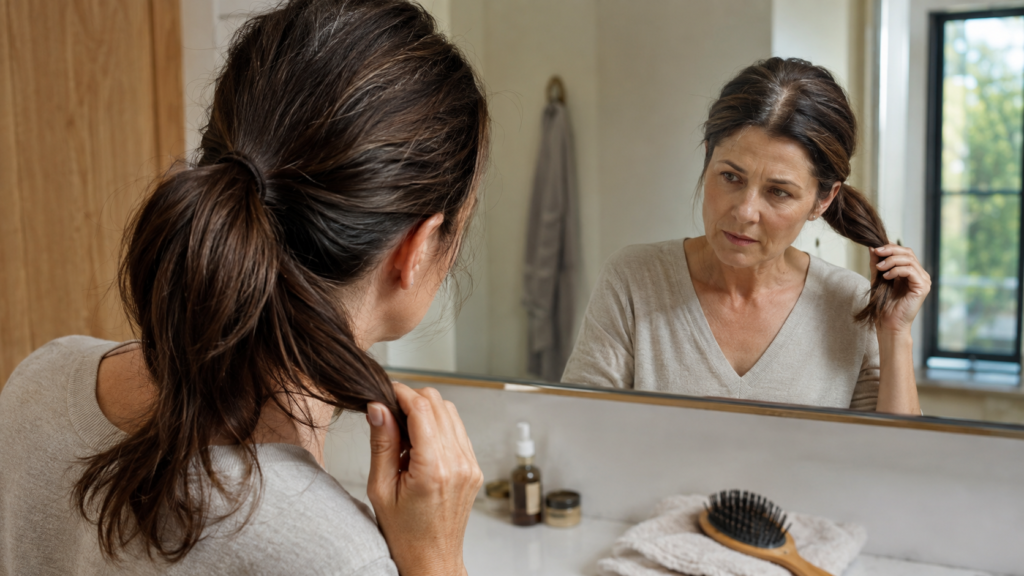
Once you know your hair thinning is hormonal, the next question is what actually helps. From minoxidil and peptides to biotin and scalp serums, not every ingredient marketed for hair loss has real evidence behind it. Here’s a breakdown of the solutions worth trying — and which ones to skip.
The Short Answer Hair thinning in your 40s and 50s is primarily driven by hormonal shifts during perimenopause and menopause, specifically declining estrogen levels combined with hair follicle miniaturization caused by DHT. Clinical solutions include topical minoxidil, targeted nutritional supplements, and botanical DHT blockers to reactive dormant follicles and restore density.
If you’ve noticed more strands in your shower drain lately, a targeted daily supplement like Nutrafol Women’s Balance can help target the internal hormonal triggers before you even change your topical routine. You wake up, pull your hair back into a clip, and notice it takes three turns of the elastic instead of two. You look closely at your hairline in the bathroom light and see more scalp than you remember. It’s easy to feel panicked or to assume you did something wrong—that you used the wrong brush, dyed it too often, or washed it incorrectly. Here is the honest truth: you didn’t break your hair. What you are experiencing is a completely normal biological shift as estrogen levels drop during perimenopause, leaving hair follicles more vulnerable to shrinking.
The Science of Hair Loss After 40 Women Experience
Understanding the biological mechanics of midlife hair thinning is the first step toward choosing a treatment that actually works.
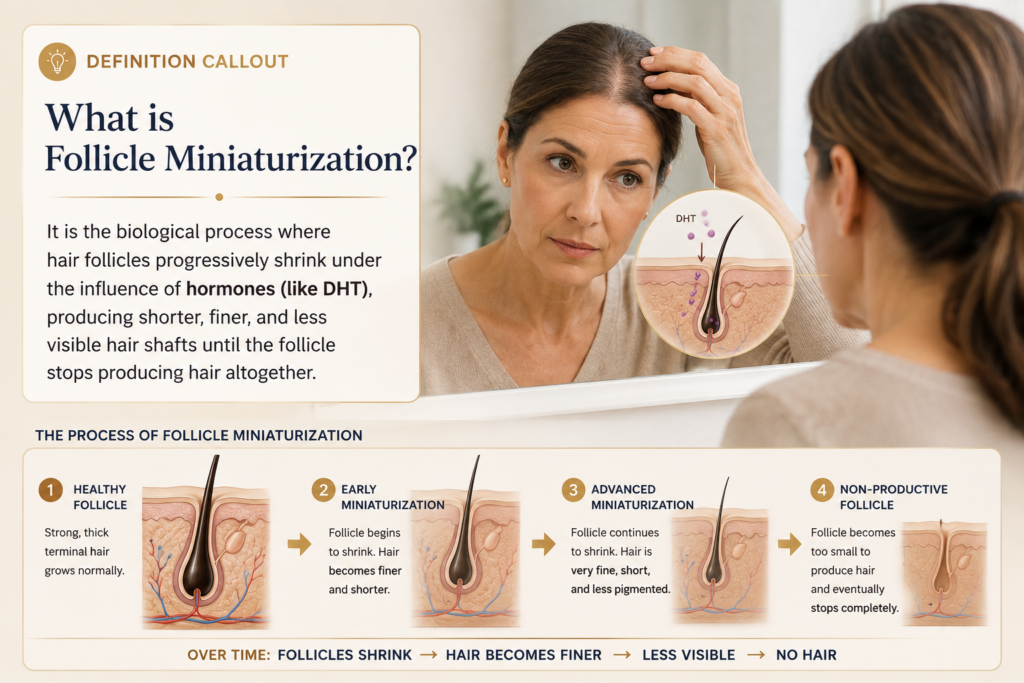
Definition Callout What is Follicle Miniaturization? It is the biological process where hair follicles progressively shrink under the influence of hormones (like DHT), producing shorter, finer, and less visible hair shafts until the follicle stops producing hair altogether.
During your late 30s and 40s, dropping estrogen levels shorten the active growth (anagen) phase of your hair cycle while extending the resting (telogen) phase. At the same time, dihydrotestosterone (DHT) binds to scalp receptors, causing follicles to miniaturize.
According to a clinical meta-analysis published in Drug Design, Development and Therapy, targeted interventions like topical minoxidil effectively reverse this process by inducing catenin activity and increasing vascular endothelial growth factor (VEGF), resulting in a proven increase in hair density.
| Ingredient / Target | Primary Biological Action | Primary Benefit for Women 40+ |
| 5% Minoxidil | Opens potassium channels; increases VEGF | Regrows hair and thickens hair shaft diameter |
| Rosemary Oil | Microcapillary perfusion; mild DHT inhibition | Improves scalp circulation with low irritation |
| Saw Palmetto | Inhibits 5-alpha reductase activity | Helps block DHT from shrinking follicles |
| Marine Collagen | Provides essential amino acids & peptide building blocks | Supports structural hair strength from within |
What Doesn’t Work for Midlife Hair Loss
Before investing in a new shelf of products, it helps to eliminate treatments that simply cannot fix biologically driven thinning.
- Biotin-only gummies: While biotin supports general keratin infrastructure, taking isolated biotin without addressing hormonal shifts or DHT activity will not stop hair thinning perimenopause causes.
- Surface-level hair masks: Conditioning masks smooth the outer cuticle of existing hair strands but cannot reach the scalp dermal papilla to reactivate dormant hair follicles.
- Washing hair less often: Frequent washing does not cause permanent hair loss; the hairs shed in the shower were already detached at the root weeks prior during the telogen phase.
Disclosure:- This post contains affiliate links; if you buy through them, GlowAfter40 may earn a small commission at no extra cost to you.
What Actually Helps: 5 Verified Products for Hair Loss After 40 Women
To restore visible density, target hair thinning from both the inside and the outside using clinically backed ingredients.
1. Daily Internal Support for Hormonal Hair Thinning
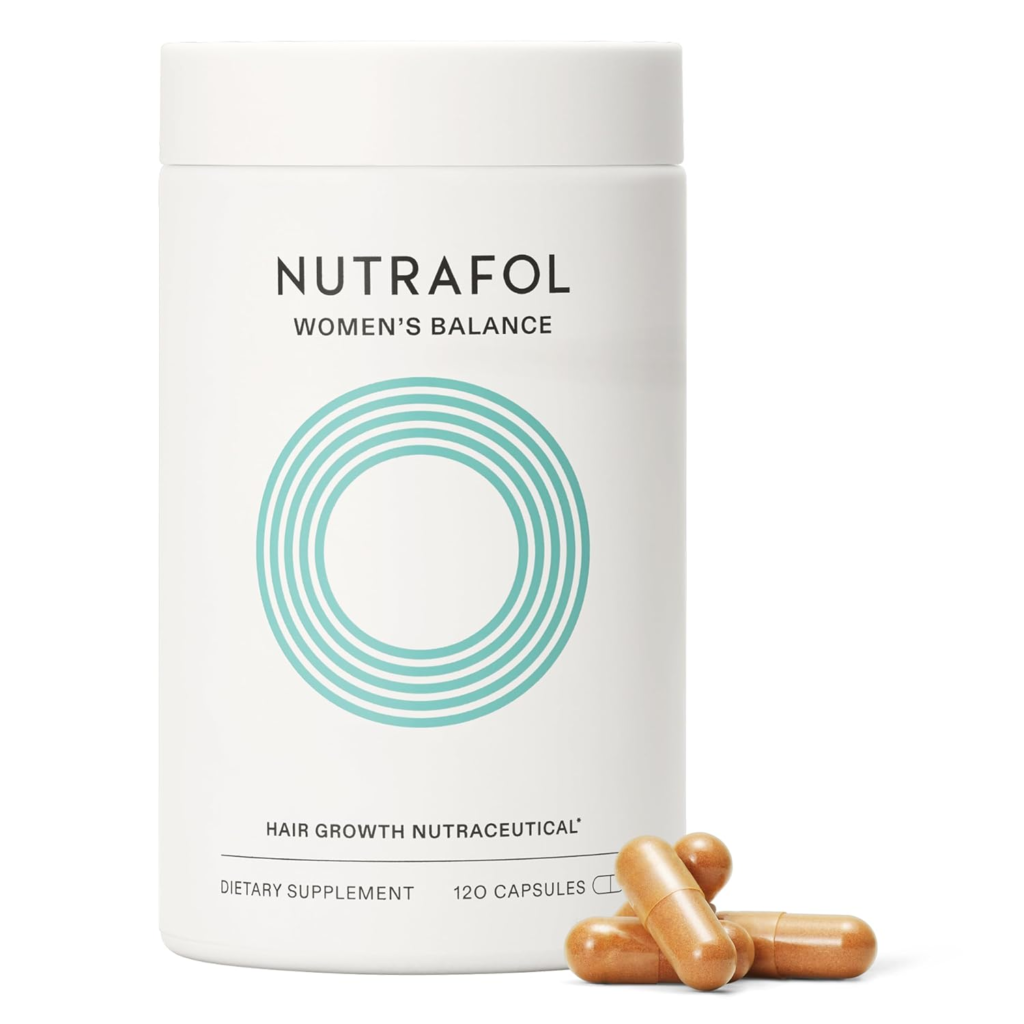
Nutrafol Women’s Balance — a daily nutraceutical for hair thinning perimenopause
If you feel like your hair density changed overnight due to shifting hormones, this comprehensive daily supplement is designed for your exact stage of life. It targets internal root causes like stress, cortisol, and hormone shifts using medical-grade Saw Palmetto and Maca. It fits women age 45+ experiencing overall thinning; the primary limitation is that it requires taking four daily capsules consistently.
2. Natural Scalp Stimulation & Edge Care
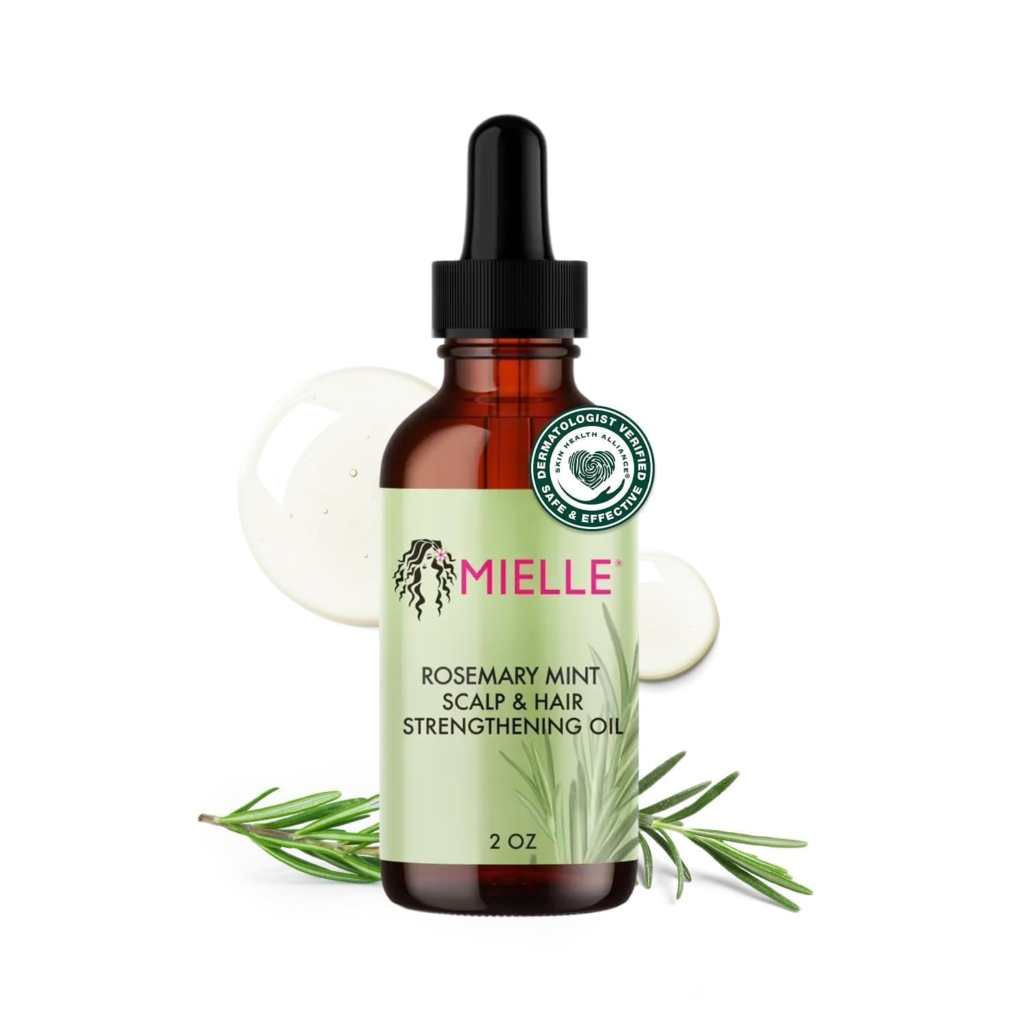
Mielle Rosemary Mint Scalp & Hair Strengthening Oil — a scalp stimulation oil under
If your scalp feels tight and your hairline edges look sparser than they used to, this refreshing botanical blend offers a natural boost. Formulated with rosemary oil, peppermint, and biotin, it improves microcirculation to nourish fragile roots. It fits women looking for natural, affordable scalp treatments; its limitation is that the oil texture can feel heavy on fine, thin hair if over-applied.
3. The Gold-Standard Topical Hair Regrowth Treatment
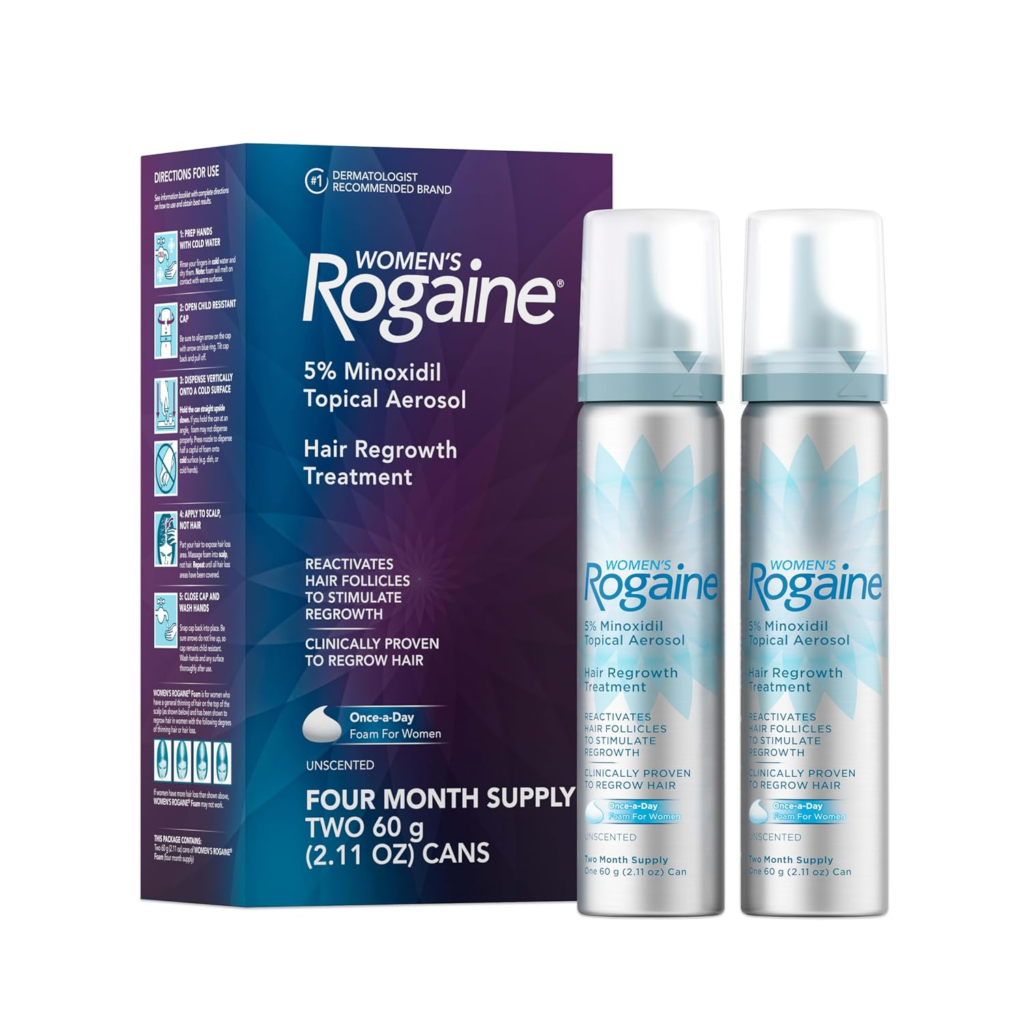
Women’s Rogaine 5% Minoxidil Foam — an FDA-approved topical minoxidil women foam treatment
If you are seeing visible scalp patches along your part line and need a clinically proven treatment, this is the top medical standard. The 5% topical minoxidil reactivation foam works directly at the follicle level to stimulate new growth cycle transitions. It fits women dealing with hereditary pattern thinning; its limitation is that results require continuous daily use to maintain new hair growth.
4. Marine-Protein Nutritional Hair Densifying Supplement
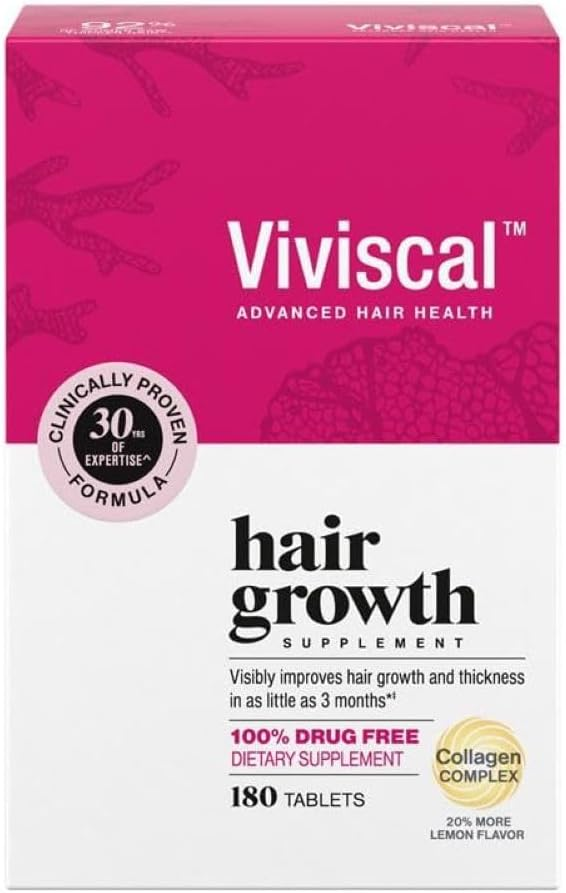
Viviscal Women’s Supplements — a 3-month marine-protein supplement supply ·
If you want to significantly reduce daily shedding in the shower and nourish brittle hair shafts, this long-trusted supplement delivers essential marine complexes. Formulated with AminoMar C and zinc, it feeds thinning hair during the growth phase. It fits women needing nutritional density support; its limitation is that it contains marine extracts, making it unsuitable for those with fish or shellfish allergies.
5. Clarifying & Volumizing DHT-Blocking Shampoo
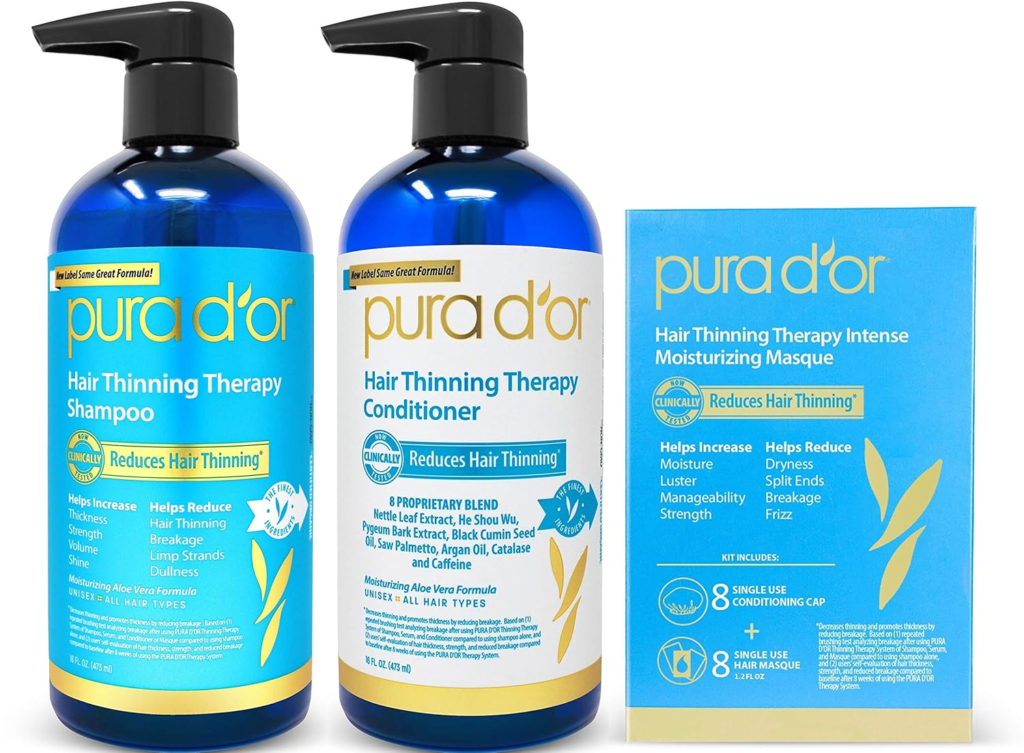
PURA D’OR Gold Label Shampoo — an anti-thinning botanical shampoo under
If your hair feels limp and you want to protect your scalp environment every time you wash, this herbal formula provides clean support. Packed with natural DHT blockers like Nettle Extract and Saw Palmetto, it strengthens the hair shaft against breakage. It fits women looking for a daily sulfate-free volumizing wash; its main limitation is that the herbal formula can feel slightly drying if used without a rich conditioner.
Realistic Timeline for Hair Density Recovery
Hair growth is a slow biological process, and managing expectations is essential when starting any new regimen.
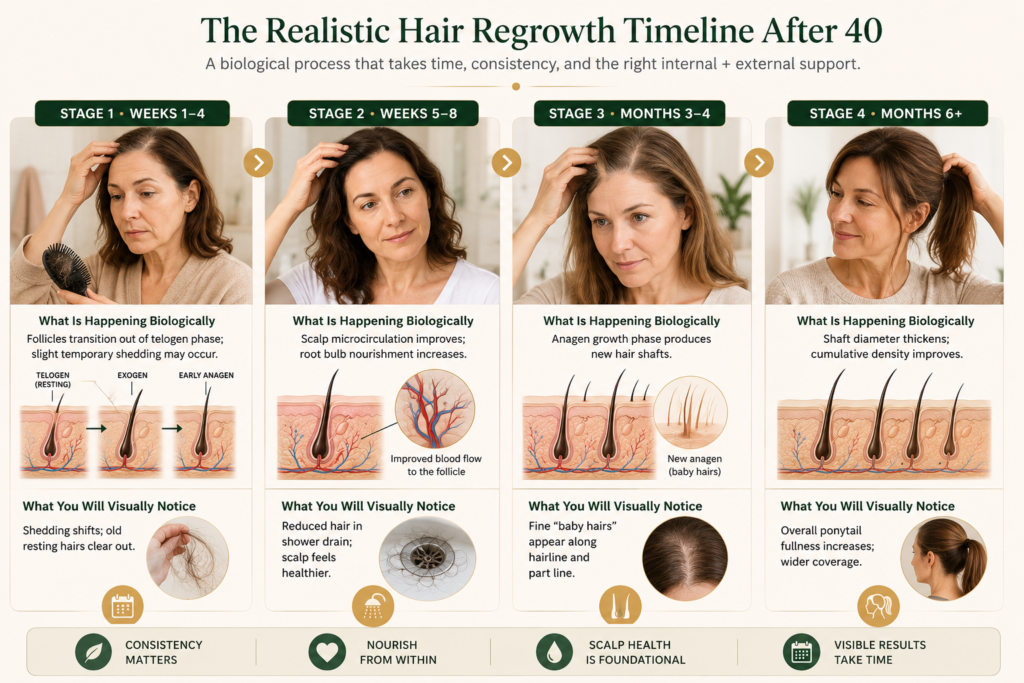
| Stage | What Is Happening Biologically | What You Will Visually Notice |
| Weeks 1–4 | Follicles transition out of telogen phase; slight temporary shedding may occur. | Shedding shifts; old resting hairs clear out. |
| Weeks 5–8 | Scalp microcirculation improves; root bulb nourishment increases. | Reduced hair in shower drain; scalp feels healthier. |
| Months 3–4 | Anagen growth phase produces new hair shafts. | Fine “baby hairs” appear along hairline and part line. |
| Months 6+ | Shaft diameter thickens; cumulative density improves. | Overall ponytail fullness increases; wider coverage. |
Frequently Asked Questions
Can drinking more water or changing my diet stop hair thinning after 40?
While balanced nutrition and hydration support overall cell health, dietary changes alone cannot overcome the impact of DHT on miniaturizing hair follicles or offset dropping estrogen levels during perimenopause. Combining a healthy diet with targeted supplements or topical treatments provides the necessary follicle support.
How do I know if my hair loss is hormonal or caused by stress?
Hormonal hair loss typically manifests slowly as a widening part line or thinning at the temples, driven by follicle miniaturization. Stress-induced loss (telogen effluvium) usually causes sudden, rapid diffuse shedding across the entire scalp roughly two to three months after a major stressful event.
Will I lose my new hair if I stop using hair loss treatments?
Yes, treatments like topical minoxidil require ongoing use to maintain results. Because minoxidil counteracts DHT miniaturization at the follicle level, stopping treatment will allow the underlying biological processes to resume, gradually reversing your progress over 3 to 6 months.
Your Action Plan for Tonight
You do not need to overhaul your entire hair routine or buy five new products at once. Tonight, take one simple step: examine your hairline gently in good lighting to establish your baseline, and choose one targeted intervention—whether that is starting a multi-targeting daily supplement or introducing a simple topical scalp treatment. Small, consistent habits implemented over time create the conditions for lasting hair health.
Explore More Articles on Hair Care Over 40:-