
The Complete Guide to Omega-3 and Menopause Skin Health
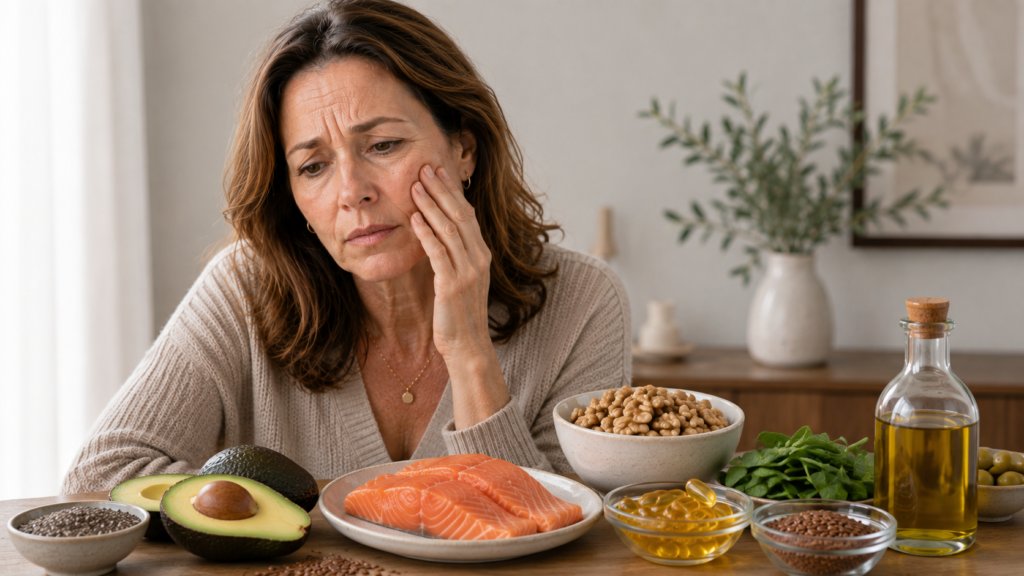
If your skin feels drier and tighter than it used to, the cause often isn’t your skincare routine — it’s what’s happening beneath it. Dropping estrogen levels during perimenopause disrupt your skin’s lipid production, leading to a weaker barrier and more water loss. This guide explains why that happens and how adding omega-3-rich foods to your diet can help rebuild that barrier from the inside, alongside the topical care you’re already doing.
You apply a thick moisturizer in the morning, only to feel your face tight, itchy, and paper-thin again by mid-afternoon. It can feel as though your skin absorbs hydration only to lose it instantly to the surrounding air. If your moisturizer seems to disappear within a few hours, the problem may not be the moisturizer itself—it is a weakened skin barrier leaking moisture continuously through Transepidermal Water Loss. The sudden change is not caused by poor hygiene or inadequate skincare products. As hormonal support declines, your skin’s underlying lipid synthesis changes significantly. Blaming yourself for these changes is unwarranted: this transition is driven by biological shifts.
Problem Explanation
The biological condition driving these symptoms is Estrogen Deficient Skin (EDS). During perimenopause and menopause, dwindling estrogen impairs the normal organization of the stratum corneum, the outermost layer of the skin.
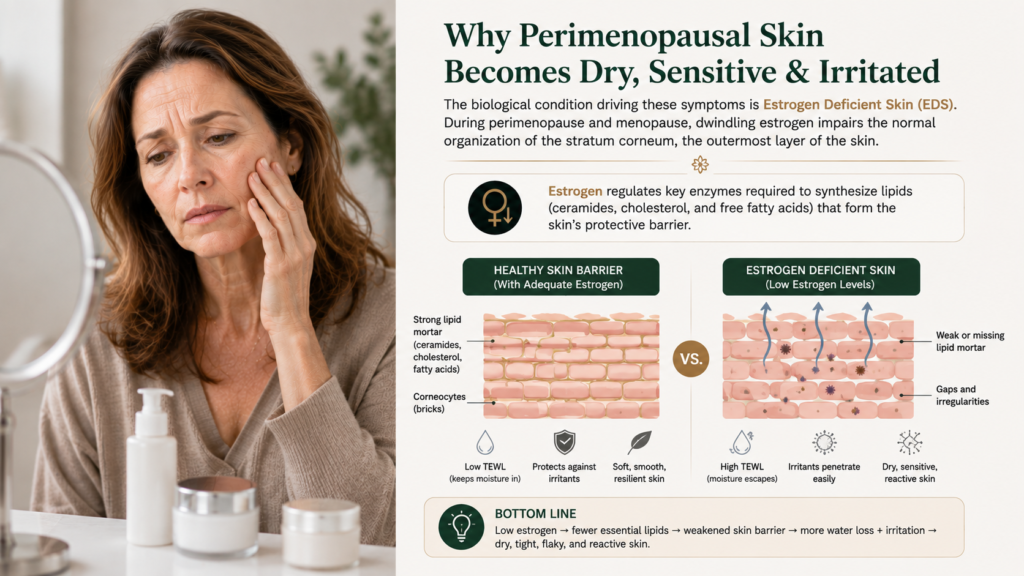
The stratum corneum operates like a brick-and-mortar structure. Corneocytes act as the bricks, held together by a protective lipid mortar comprising ceramides, cholesterol, and free fatty acids. Estrogen regulates key enzymes required to synthesize these lipids. Without sufficient estrogen, the lipid mortar becomes sparse, causing elevated Transepidermal Water Loss (TEWL) and leaving skin open to environmental irritants.
Symptoms
- Xerosis: Severe dryness and persistent flakiness that fails to respond to conventional moisturizers.
- Pruritus: Persistent itching, often worsening at night or after exposure to hot water.
- Skin Atrophy: Visible thinning of dermal layers, causing a crepey, fragile appearance.
- Heightened Sensitivity: Immediate stinging or reactivity to skincare formulas previously tolerated without issue.
- Slower Healing: Extended recovery time for minor scratches, cuts, or blemishes.
Causes
- Hormonal Shifts: Decline in 17β-estradiol (E2) and progesterone relative to circulating cortisol and naturally occurring androgens.
- Essential Fatty Acid Deficiencies: Low dietary intake of Alpha-Linolenic Acid (ALA), Eicosapentaenoic Acid (EPA), and Docosahexaenoic Acid (DHA), which the body cannot produce independently.
- Exposome Stressors: Combined impacts of UV radiation and environmental pollution that accelerate dermal degradation alongside low estrogen.
- Underlying Inflammatory Conditions: Low-grade activation of rosacea or eczema during hormonal shifts.
Science
Skin is a major estrogen-responsive tissue containing ERα and ERβ receptors within keratinocytes, fibroblasts, and sebaceous glands. Estradiol stimulates the production of hyaluronic acid and mucopolysaccharides, which hold moisture within skin tissues.
Did You Know? Menopausal skin loses up to 30% of its total dermal collagen within the first five years of menopause, while lipid production shifts toward shorter, less protective ceramide chains.
According to clinical research declining estrogen alters lipid composition and directly decreases total dermal collagen. Post-menopause, estradiol converts primarily to weaker estrone (E1), which has a far lower affinity for skin receptors and cannot efficiently maintain lipid barrier synthesis.
| Skin Parameter | Pre-Perimenopause | Perimenopause & Menopause |
| Dominant Estrogen | Estradiol (E2) — High Receptor Affinity | Estrone (E1) — Low Receptor Affinity |
| Barrier Lipid Structure | Dense, long-chain ceramides | Sparse, shorter-chain ceramides |
| Collagen Content | Stable baseline levels | 30% loss during first 5 years |
| Hydration Status | High internal Hyaluronic Acid binding | High TEWL (Water Evaporation) |
Dietary Omega-3 fatty acids directly counter these shifts by supplying building blocks for cell membranes and modulating systemic dermal inflammation. EPA protects collagen by inhibiting UV-induced matrix metalloproteinases (MMPs), while ALA from seeds and nuts provides essential precursors for barrier lipids.
Common Mistakes
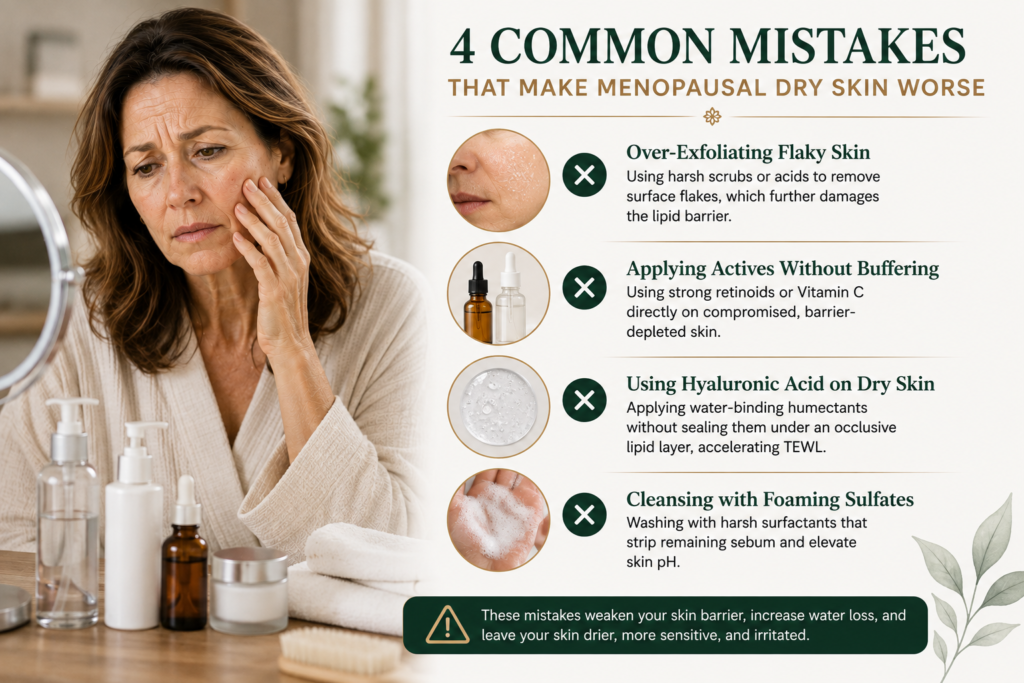
- Over-Exfoliating Flaky Skin: Using harsh scrubs or acids to remove surface flakes, which further damages the lipid barrier.
- Applying Actives Without Buffering: Using strong retinoids or Vitamin C directly on compromised, barrier-depleted skin.
- Using Hyaluronic Acid on Dry Skin: Applying water-binding humectants without sealing them under an occlusive lipid layer, accelerating TEWL.
- Cleansing with Foaming Sulfates: Washing with harsh surfactants that strip remaining sebum and elevate skin pH.
Quick Tips
- Consume Omega-3 Rich Foods Daily: Incorporate wild tuna, salmon, flaxseeds, chia seeds, and walnuts into your daily meals to supply essential fatty acids.
- Cleanse with Non-Foaming Creams: Replace foaming washes with lipid-rich cream or oil cleansers.
- Layer Moisture on Damp Skin: Apply hydrating serums onto slightly damp skin and lock them in immediately with a lipid moisturizer.
- Use Daily Mineral Sunscreen: Protect delicate dermal collagen using gentle zinc oxide formulas.
Frequently Asked Questions
How do Omega-3 foods help rebuild the skin barrier during perimenopause?
Omega-3 fatty acids supply essential fatty acids (ALA, EPA, DHA) that the body cannot synthesize. They nourish cell membranes, reduce dermal inflammation, and promote structural lipid synthesis needed to prevent water loss.
Why does my skin feel sensitive to products I used for years?
Estrogen-deficient skin leads to a thinner, disorganized stratum corneum. Irritants penetrate more deeply and rapidly, triggering inflammation in nerve endings that previously were protected.
Can dietary changes alone completely fix my skin barrier?
Dietary Omega-3 intake provides internal building blocks and lowers inflammation, but topical barrier support (ceramides, gentle cleansers) is usually necessary to seal moisture from the outside.
Why am I experiencing hormonal breakouts alongside extreme dryness?
Dropping estrogen creates a relative excess of circulating androgens. Even though skin produces less overall lipid volume, altered sebum consistency mixed with dry skin flakes can clog pores.
What is Transepidermal Water Loss (TEWL)?
TEWL refers to water passively evaporating through the stratum corneum into the air. When estrogen drops and ceramide levels fall, TEWL increases significantly, resulting in tight, uncomfortable skin.
Should I pause active ingredients while repairing my barrier?
Yes, temporarily pause strong acids and exfoliants until tightness and stinging resolve. Reintroduce active treatments slowly over a supportive barrier moisturizer.
Action Plan
To restore your skin barrier through dietary and topical support, adopt these steps:
- Tonight: Eliminate physical scrubs and strong active acids. Cleanse gently with a non-foaming cream wash, apply your hydrating serum to damp skin, and seal it with a lipid-replenishing moisturizer.
- This Week: Add Omega-3 rich foods to your daily meal plan—such as flaxseed, chia seeds, walnuts, or cold-water fish like tuna—to supply necessary lipid precursors. Ensure you apply mineral SPF daily to protect vulnerable collagen.
Explore More Articles on Omega-3 & Skin Health :-