EVIDENCE-INFORMED·INGREDIENT-FOCUSED· NO MIRACLE CLAIMS
GlowAfter40
Why Your Moisturizer Stops Working After 50 (The Science Explained)
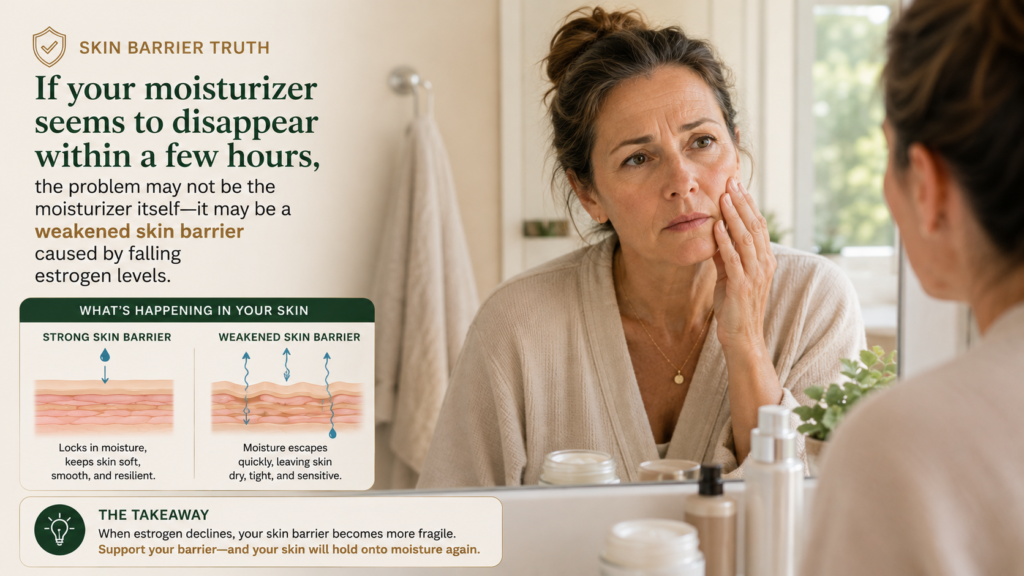
If your favorite face cream has suddenly started stinging or your skin feels parched within hours of applying it, the product hasn’t changed — your skin barrier has. Falling estrogen slows down ceramide production in the stratum corneum and speeds up transepidermal water loss, leaving skin more reactive to ingredients it used to tolerate fine. Here’s exactly what’s breaking down, and why lowering your routine’s pH and rebuilding lipids matters more than switching moisturizers again.
Early Hint: If you need immediate barrier comfort while reading the science, a fragrance-free ceramide barrier cream under $20 can help lock in moisture without stinging. You wake up, apply a rich layer of the cream that served you faithfully for a decade, and by noon, your face feels tight, itchy, and paper-thin. Products that used to deliver a healthy glow now sit on top of your skin or, worse, trigger a burning, prickling dermatitis.
The Science of Menopausal Skin Barrier Breakdown
Medical research defines menopausal skin barrier breakdown as the systemic deterioration of the stratum corneum (the outermost layer of your skin) caused by hypoestrogenism—the medical term for abnormally low estrogen levels.
What is Hypoestrogenism? It is the state of marked decline in circulating estrogen during perimenopause and menopause. This decline directly alters cellular turnover, collagen structure, and hydration capacity.
Estrogen receptors (specifically ERβ) are densely packed throughout your dermal and epidermal cells. When estrogen levels plunge during menopause, those receptors stop receiving signals to produce essential skin lipids. According to the American Academy of Dermatology (AAD) the structural shift in midlife skin requires targeted lipid replenishment rather than just heavy oils.
Hormonal Change
Biological Mechanism
Visible Impact on Skin
Estrogen Decline
Drops ceramide synthesis & hyaluronic acid
Severe xerosis, crepey texture, burning
Progesterone Drop
Reduces anti-inflammatory defenses
Increased reactivity & redness
Relative Androgen Shift
Alters sebum-to-estrogen ratio
Adult acne alongside dry skin
Cortisol Elevation
Impairs tissue repair & barrier function
Slow healing and increased sensitivity
Ceramide Loss: Ceramides act as the “mortar” holding your skin cells together. Estrogen loss causes ceramide levels in the stratum corneum to drop by up to 30%, causing the protective structure to collapse.
Transepidermal Water Loss (TEWL): As lipids vanish, moisture diffuses passively from your inner dermis right out into the air, a process known as TEWL.
Acid Mantle & pH Shift: Estrogen deficiency reduces sebum production, causing skin pH to rise above its healthy acidic range (4.5–5.5). This disrupts the skin microbiome, leaving skin vulnerable to reactive stinging.
Epidermal Thinning & Collagen Loss: Skin loses roughly 30% of its collagen in the first five years after menopause, while skin thickness decreases by 1.13% every postmenopausal year.
What Doesn’t Work (and What Makes It Worse)
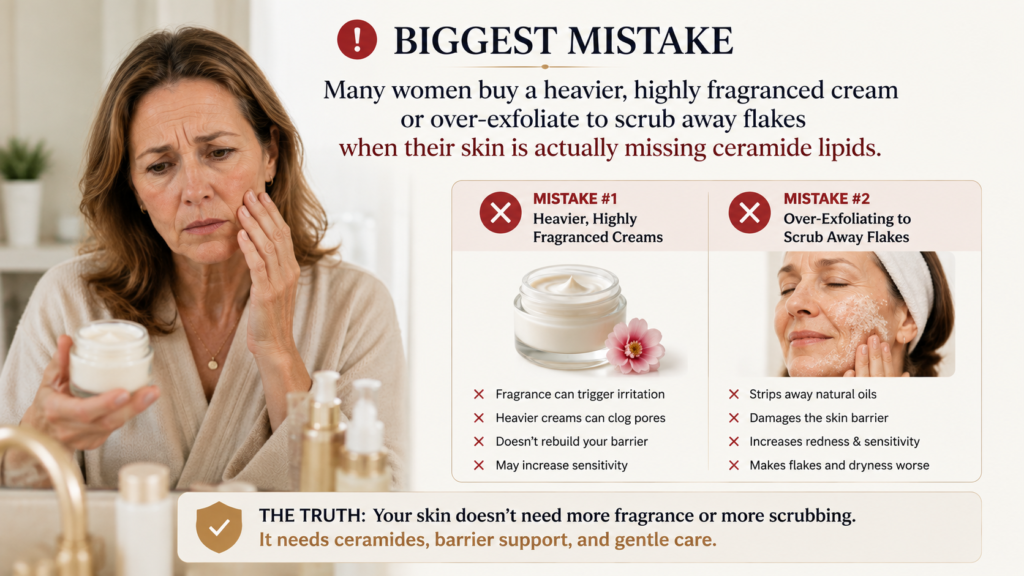
When faced with extreme dryness, our instinct is to throw aggressive treatments at the problem. However, traditional dry-skin tactics often exacerbate a compromised barrier
Applying Heavy Mineral Oils Alone: Occlusives lock moisture in, but if your skin lacks intercellular lipids (ceramides and cholesterol), you are sealing in empty, dehydrated space.
Exfoliating Away the Flakes: Scrubbing with harsh physical powders or strong glycolic acids strips away the few remaining protective lipids, worsening epidermal atrophy.
High-pH Harsh Cleansers: Foaming cleansers strip the acid mantle, elevating skin pH and inviting pathogenic bacterial overgrowth.
Ignoring Product Stinging: Continuing to apply active retinoids or serums when they cause a burning sensation damages the nerve signaling in the epidermis.
How to Repair the Barrier: What Actually Works
Restoring menopausal skin requires replacing lost lipid components and calming systemic reactivity.
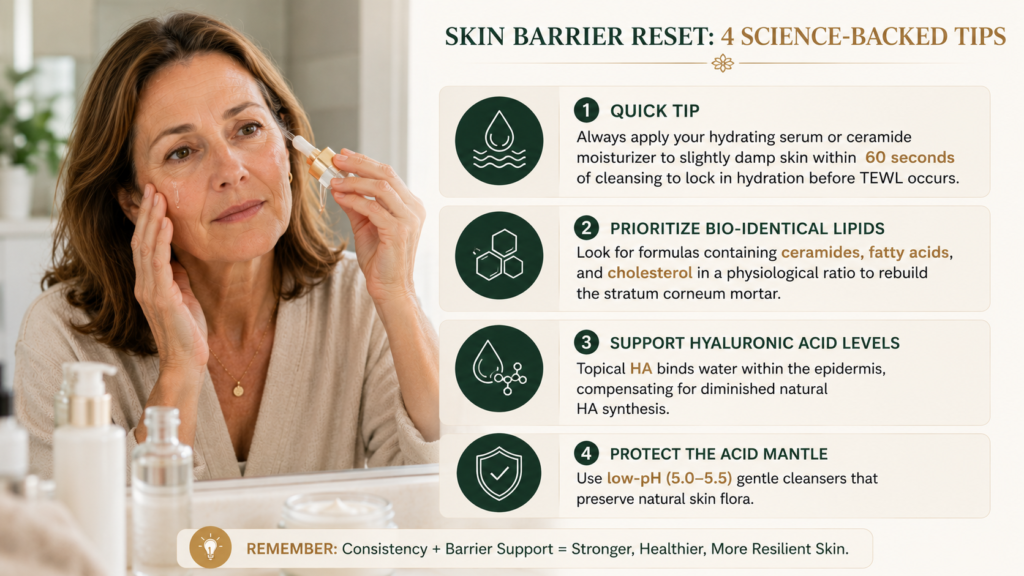
Prioritize Bio-Identical Lipids: Look for formulas containing ceramides, fatty acids, and cholesterol in a physiological ratio to rebuild the stratum corneum mortar.
Support Hyaluronic Acid Levels: Topical HA binds water within the epidermis, compensating for diminished natural HA synthesis.
Protect the Acid Mantle: Use low-pH (5.0–5.5) gentle cleansers that preserve natural skin flora.
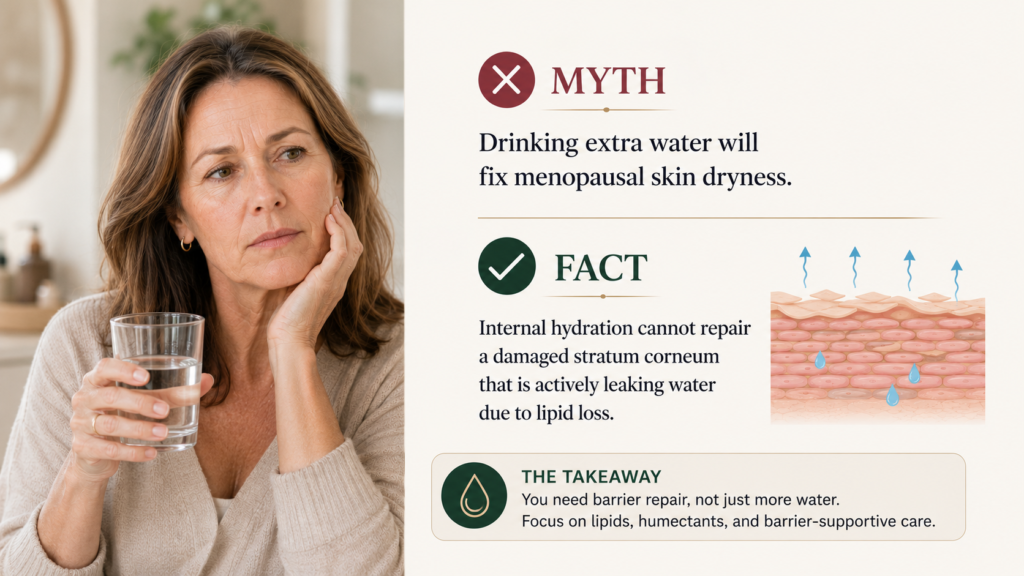
■ Myth vs Fact
Myth: Drinking extra water will fix menopausal skin dryness. Fact: Internal hydration cannot repair a damaged stratum corneum that is actively leaking water due to lipid loss.
Realistic Timeline for Barrier Recovery
Barrier restoration does not happen overnight, but consistent lipid replenishment yields predictable improvements
Timeline
What Is Happening Biologically
What You Will Feel & See
Week 1–2
Acid mantle begins to stabilize; reduced TEWL
Stinging and burning sensations fade
Week 4
Stratum corneum lipid levels recover
Skin holds hydration through the afternoon
Week 8+
Keratinocyte proliferation improves
Rough texture smooths out; redness drops
It will not return your skin to how it behaved at 25. What it will do is build a resilient, comfortable, and healthy outer shield that glows naturally.
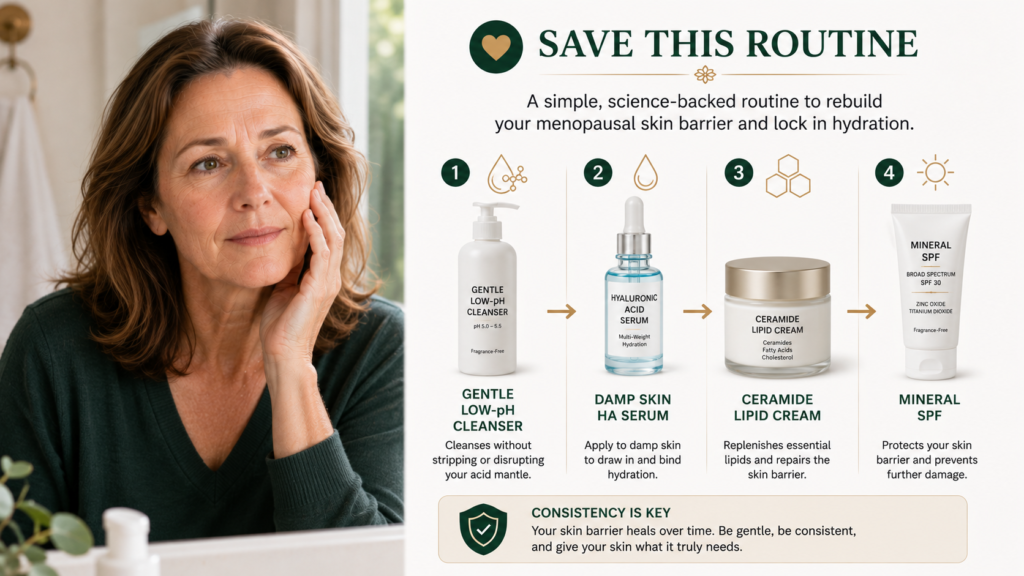
❤■ Save This Routine: Gentle Low-pH Cleanser → Damp Skin HA Serum → Ceramide Lipid Cream → Mineral SPF
Frequently Asked Questions
Why is my skin suddenly so dry after menopause? The rapid drop in circulating estrogen reduces ceramide lipid synthesis and hyaluronic acid production in the skin, causing moisture to escape rapidly.
Why does my moisturizer cause a burning sensation? When menopausal skin barrier breakdown occurs, tiny microscopic gaps form in the stratum corneum. Topically applied products penetrate too quickly and deeply, irritating underlying nerve endings.
Can I rebuild my skin barrier naturally? Yes, by using bio-identical lipid creams (ceramides, fatty acids, cholesterol), switching to a low-pH cleanser, and protecting your skin daily from UV degradation.
Your Action Plan for Tonight
Tonight, give your skin a break from all active ingredients, harsh exfoliants, and fragranced treatments. Wash your face with lukewarm water and a gentle, non-foaming cleanser. While your skin is still damp, pat on a simple, ceramide-rich barrier cream to begin locking in essential hydration.
Taking care of midlife skin isn’t about fighting age—it’s about giving your skin the precise physiological support it needs right now. For more ways to navigate midlife changes, explore our guide on handling hormonal acne after 40 or read about morning vs evening routines for mature skin.
For more details on managing midlife skin health, read our guides on :