
5 Real Causes of Scalp Flaking After 40 (It’s Not Just Dandruff)
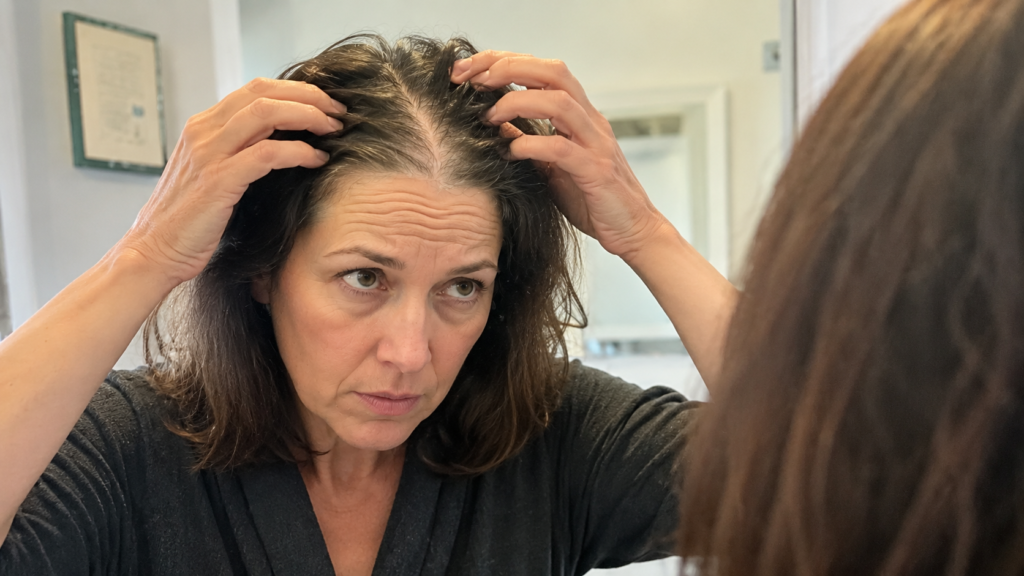
If you’re over 40 and suddenly seeing flakes on your shoulders despite no change in shampoo or routine, dandruff is probably the wrong diagnosis. What’s actually happening is a shift inside your scalp itself — and it usually traces back to one of five specific causes. Understanding which one applies to you is the first step to actually fixing it, instead of masking it with the wrong product.
Short Answer
Dry scalp and flaking after 40 is primarily caused by intrinsic aging and declining estrogen levels, which cause sebaceous glands to shrink and reduce oil production. Unlike true dandruff, which involves yeast overgrowth and greasy scales, midlife flaking is a dry skin condition characterized by tightness, itching, and micro-flaking due to accelerated moisture loss. Restoring comfort requires gentle, sulfate-free cleansing and lipid-replenishing hydration rather than harsh anti-dandruff treatments.
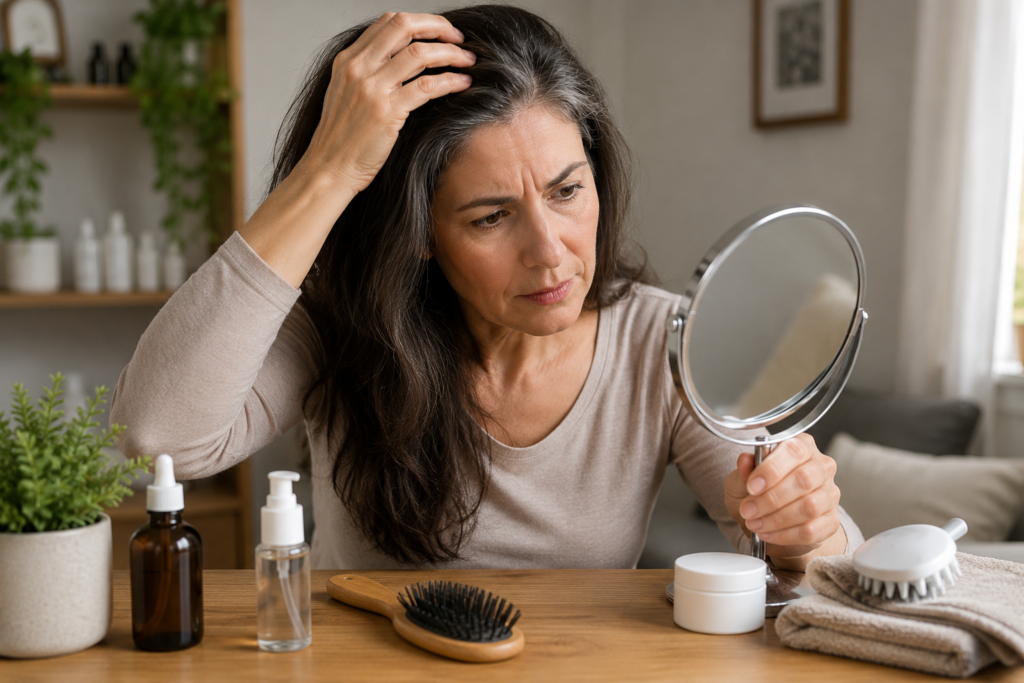
It is deeply frustrating when your body changes the rules without asking. You spent decades managing your hair and skin routine with predictable results, only to find yourself dealing with sudden tightness, a persistent itch along your hairline, and embarrassing fine flakes. You might feel quietly self-conscious, constantly checking your shoulders throughout the day, wondering why standard solutions no longer work. Please know that this is not a hygiene issue or a personal failure; it is a predictable physiological shift happening beneath the surface.
Problem Explanation
Dry scalp and flaking after age 40 occurs when the scalp’s protective epidermal barrier becomes compromised. The scalp possesses a high density of oil-producing sebaceous glands, making it heavily reliant on hormonal stimulation to maintain its natural moisture-locking lipid film. As estrogen levels fluctuate and decline during perimenopause and postmenopause, these glands slow down significantly. Without an adequate supply of surface lipids, moisture escapes rapidly into the air, leading to a tight, dehydrated stratum corneum that sheds fine, dry flakes.
Symptoms
- Persistent Pruritus: An intermittent or continuous dry itch across the parietal and occipital regions of the scalp.
- Micro-Flaking: Fine, white, dry, and non-greasy flakes that easily detach from the scalp and scatter on clothing.
- Scalp Tightness: A distinct sensation of tautness or discomfort, particularly right after washing your hair.
- Wiry Hair Texture: Coincident drying of the hair shaft because the roots are no longer producing enough natural sebum to coat and lubricate the strands.
- Mild Erythema: Occasional localized redness caused by the friction of scratching a fragile, compromised barrier.
Causes
The root causes of midlife scalp flaking stem from a combination of biological aging and environmental stressors:
- Estrogen Depletion: Ovarian follicular depletion during perimenopause drastically reduces sebaceous lipogenesis, altering the composition of your scalp’s natural oils.
- Aggressive Hair Care Practices: Frequent use of harsh sulfate-based detergents, high-heat styling, and chemical processing strip away what little lipid mantle remains.
- Environmental Stressors: Low humidity, indoor heating, air conditioning, and cold weather accelerate the evaporation of moisture from the skin.
- Nutritional Gaps: Diets lacking in essential fatty acids, complete proteins, and key micronutrients impair the body’s ability to synthesize a healthy intercellular lipid matrix.
Science
The scalp is specialized skin containing thousands of terminal hair follicles, each anchored to a sebaceous unit. The structural integrity of this skin relies on a “brick-and-mortar” model, where cellular bricks (corneocytes) are held together by an intercellular lipid mortar made of ceramides, cholesterol, and free fatty acids.
Estrogen receptors are present throughout human sebocytes and dermal fibroblasts. When circulating estradiol drops, sebocyte proliferation slows down, hyaluronic acid synthesis in the dermal extracellular matrix decreases, and the overall water-holding capacity plummets. This triggers an elevation in transepidermal water loss (TEWL), measuring the moisture escaping from your body into the atmosphere. According to clinical dermatology data from the American Academy of Dermatology, over 50% of women over 50 experience generalized skin xerosis, with scalp involvement closely following these hormonal shifts.
Common Mistakes
- Treating Dry Flaking Like Dandruff: Using harsh antifungal or medicated anti-dandruff shampoos containing zinc pyrithione or selenium sulfide strips away remaining oils and severely worsens midlife xerosis.
- Washing with Very Hot Water: Hot showers melt and wash away the fragile lipid mantle protecting your scalp, accelerating moisture loss.
- Over-Relying on Harsh Surfactants: Continuously using shampoos with sodium lauryl sulfate (SLS) leaves the scalp stripped and reactive.
- Ignoring Scalp Moisturization: Applying advanced skincare to your face and neck while completely neglecting the skin hidden beneath your hair.
Quick Tips
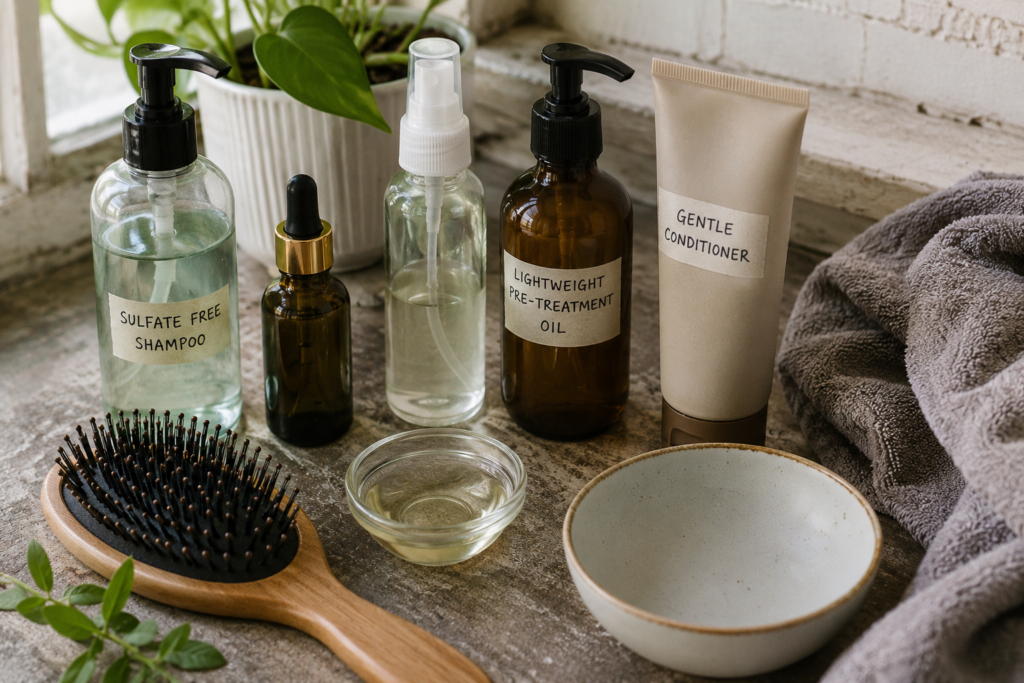
- Switch to Sulfate-Free Cleansing: Choose a pH-balanced, hydrating shampoo formulated with mild amino acid surfactants.
- Lower Your Water Temperature: Always rinse your hair and scalp with lukewarm or cool water to preserve your natural oils.
- Space Out Washes: Reduce your washing frequency to two or three times a week to allow natural sebum to redistribute along the scalp.
- Use Lightweight Pre-Treatments: Massage a few drops of lightweight botanical oils, such as squalane or jojoba oil, into your scalp before cleansing to soften dry patches.
FAQ
Is midlife scalp flaking always dandruff? No. True dandruff is caused by yeast overgrowth and inflammation that yields greasy, yellowish scales, whereas midlife flaking is dry, fine, and xerotic in nature. Using anti-dandruff shampoos on a dry midlife scalp will usually make the tightness and flaking worse.
Can hair thinning happen at the same time as a dry scalp? Yes. Hormonal shifts that alter hair follicle cycling and miniaturization often co-occur with changes in scalp micro-environments during perimenopause.
Does drinking more water fix a dry scalp after 40? While systemic hydration is important, drinking extra water alone cannot fix a dry scalp if your skin’s lipid barrier is compromised and allowing moisture to evaporate too quickly.
How often should I wash my hair if my scalp is dry? For most women over 40, reducing washing frequency to 2 to 3 times per week helps preserve natural sebum and reduces irritation caused by over-cleansing.
Action Plan
This week, audit your current hair care routine and make three immediate adjustments. First, replace your daily shampoo with a gentle, sulfate-free, pH-balanced alternative. Second, drop your shower temperature down to lukewarm when washing your hair. Third, try reducing your wash schedule to give your sebaceous glands a chance to catch up and protect your scalp naturally. Consistency and gentleness are your best tools for restoring comfort.
Explore More Articles on Scalp Health :-