
Dry Scalp Treatments Compared: Which One Actually Works After 40?
If a heavier, more moisturizing shampoo hasn’t fixed your flaking, the problem might not be dryness at all — it could be Malassezia-driven dandruff or seborrheic dermatitis, which needs an active treatment ingredient rather than more moisture. Here’s how the three most common OTC options — ketoconazole, pyrithione zinc, and selenium sulfide — actually compare, so you can pick the one suited to your scalp.
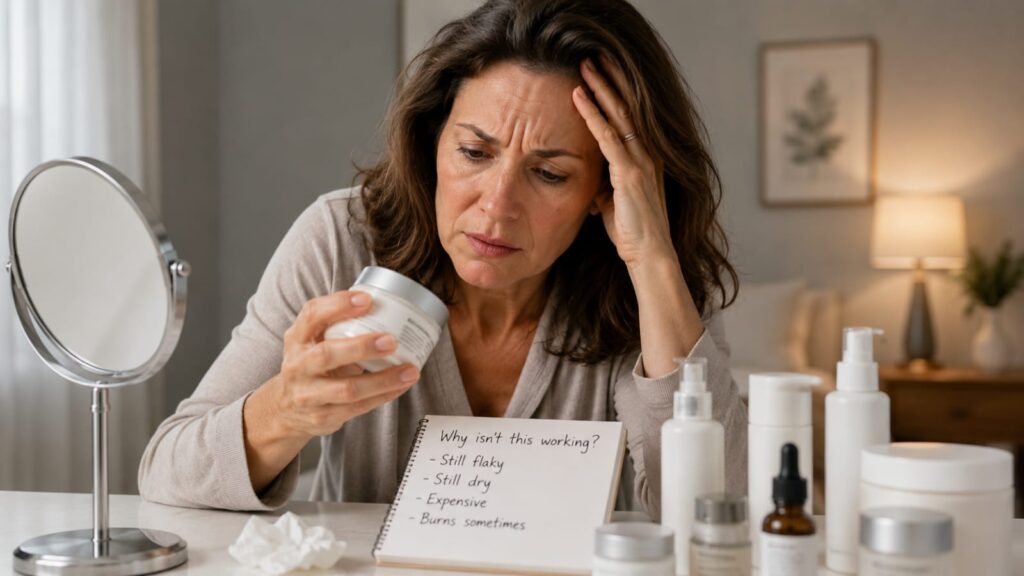
Waking up to dustings of white flakes on your dark tops after 40 brings a quiet, frustrating shame. You have likely spent years using the same hair care products without issue, only to suddenly feel like your scalp is constantly tight, itchy, or visibly peeling. It is easy to blame yourself or assume you aren’t washing your hair thoroughly enough. However, this shift is completely biological. Menopausal skin loses its ability to retain water efficiently as estrogen levels shift, leading to increased transepidermal water loss across the entire body—including your scalp.
The Science of Scalp Flaking After 40
A dry, flaky scalp after age 40 usually falls into one of two clinical categories: simple skin barrier dehydration or an inflammatory scaling condition like dandruff or seborrheic dermatitis. According to the American Academy of Dermatology, when standard hydrating shampoos fail to resolve flaking, underlying conditions like seborrheic dermatitis, psoriasis, or fungal overgrowth should be considered.
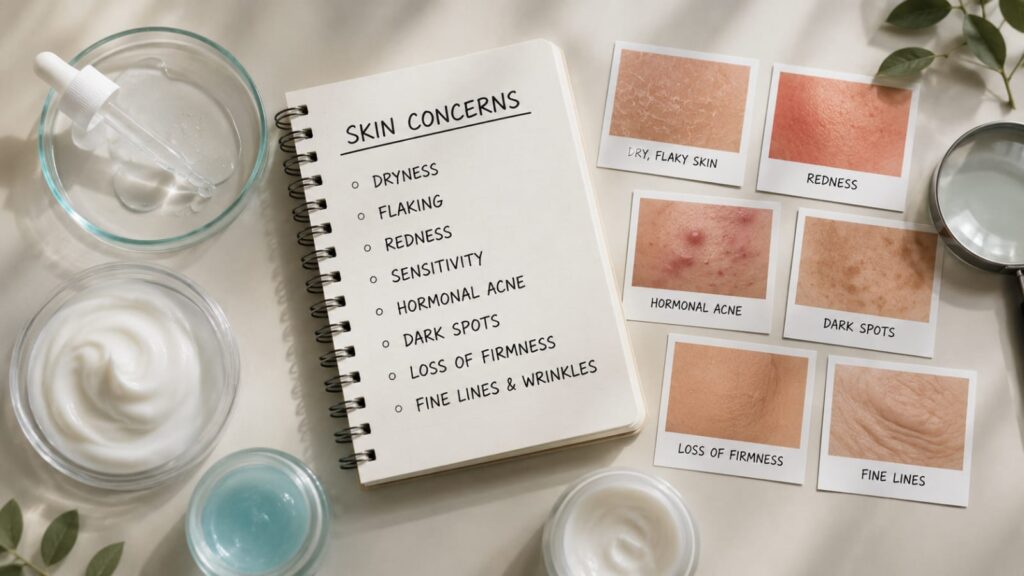
What is Seborrheic Dermatitis? An inflammatory skin condition caused by an overreaction to Malassezia yeast on the scalp, leading to greasy, yellowish, or sticky flakes accompanied by itching or redness.
| Condition | Primary Cause | Flake Appearance | Scalp Sensation | Effective Active |
| Simple Dehydration | Barrier disruption & estrogen drop | Small, dry, fine white specks | Tight, dry, non-greasy discomfort | Hyaluronic acid, glycerin, ceramides |
| Dandruff / Seborrheic Derm | Malassezia yeast overgrowth | Larger, oily, yellowish/sticky scale | Itchy, inflamed, or reddened scalp | Ketoconazole, Zinc Pyrithione, Selenium Sulfide |
| Adherent Buildup | Hyperkeratinization / Psoriasis | Thick, layered, stubborn scale | Irritated, rough, tight buildup | Salicylic acid, Coal tar |
What Stops Working (And Common Mistakes)
When flaking appears, several intuitive reactions can actually worsen scalp health:
- Piling on hair oils: Heavy natural oils feed Malassezia yeast, turning mild flaking into severe seborrheic dermatitis.
- Over-scrubbing with hot water: Washing aggressively strips the delicate scalp barrier and triggers compensatory dryness.
- Rinsing medicated shampoos immediately: Active ingredients require 3–5 minutes of contact time on the scalp to work effectively.
- Applying drying anti-dandruff washes to hair lengths: Actives like selenium sulfide or coal tar dry out coily, curly, or mature hair strands if applied beyond the root line.
What Works: Top Scalp Solutions
1. Nizoral Anti-Dandruff Shampoo — 1% Ketoconazole ·
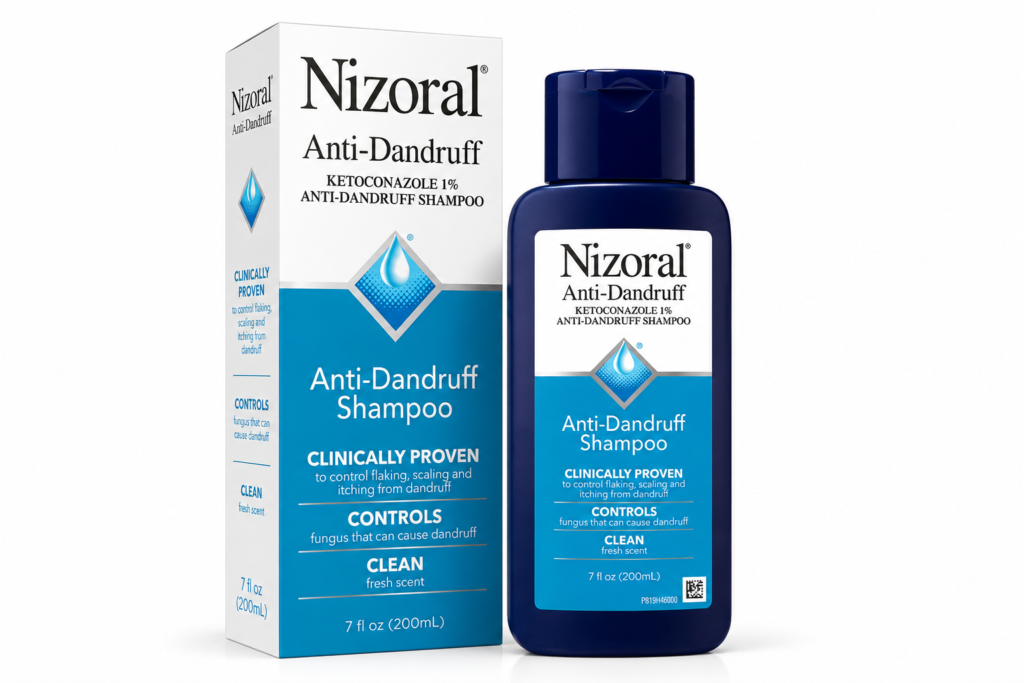
If your scalp feels persistently itchy and produces oily, recurrent flakes that no moisturizer can touch, this formula provides direct targeted relief. It utilizes 1% ketoconazole to suppress yeast-driven flaking while requiring use only every 3–4 days. Fits recurrent dandruff; honest limitation: contains fresh fragrance and sulfates that may feel drying if overused.
2. CeraVe Hydrating Anti-Dandruff Shampoo — 1% Pyrithione Zinc
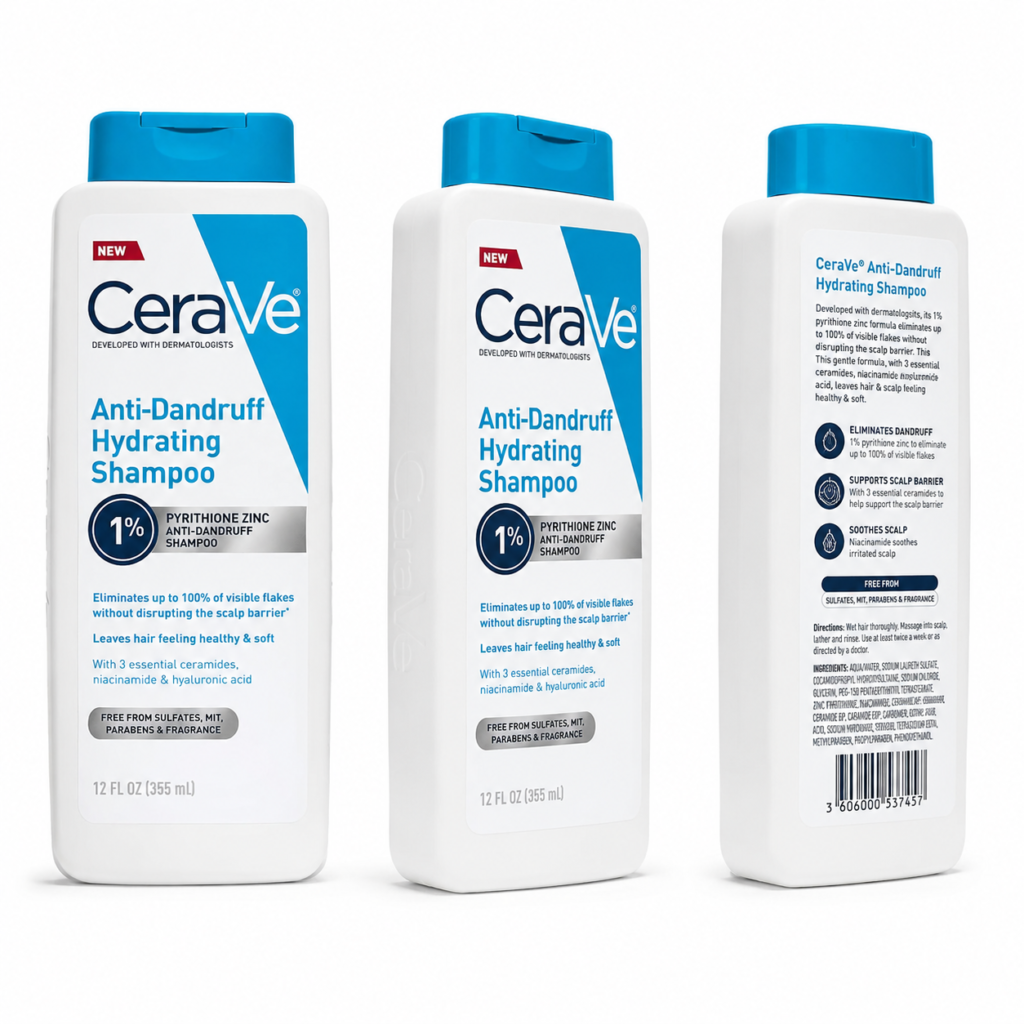
If you are struggling with itchy flakes but your scalp already feels tight, stripped, and sensitive, this hydrating treatment bridges the gap perfectly. It combines active pyrithione zinc with barrier-supporting ceramides and hyaluronic acid. Fits dry-feeling scalps with active dandruff; honest limitation: active control is gentler than high-strength ketoconazole.
3. Neutrogena T/Sal Therapeutic Shampoo — 3% Salicylic Acid
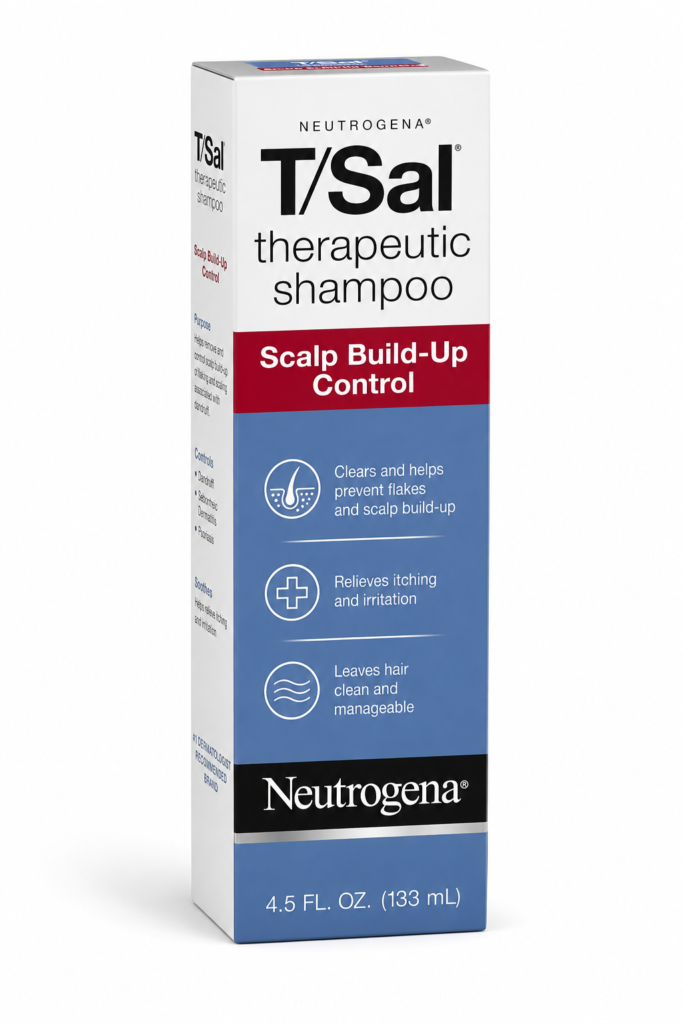
If your scalp has developed thick, crusty buildup or adherent scales that refuse to wash away, this fragrance-free treatment loosens scale quickly. It breaks down stubborn buildup without leaving perfume residue behind. Fits heavy buildup and psoriasis-type scaling; honest limitation: it is a scale remover, not a primary antifungal.
4. Vanicream Shampoo — Gentle Non-Medicated Cleanser
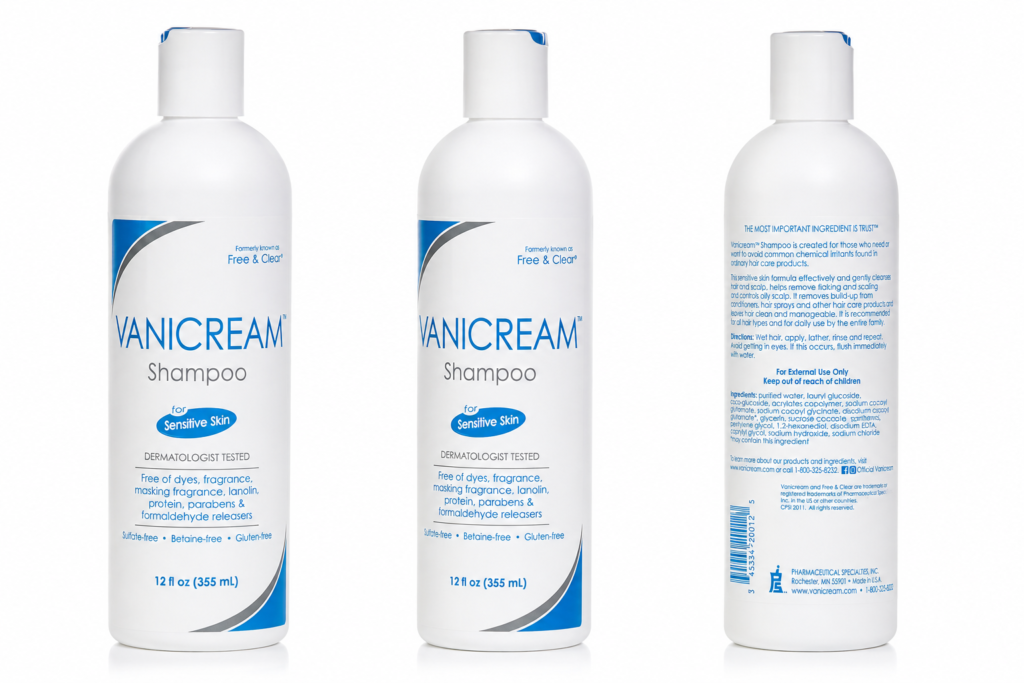
If your scalp stings the second you apply standard products and you suspect allergic contact dermatitis, this formula strips away all common irritants. Free of dyes, fragrance, masking fragrance, and harsh preservatives, it cleanses without disruption. Fits sensitive, fragrance-reactive scalps; honest limitation: contains zero medicated anti-dandruff actives.
Treatment Expectations & Timeline
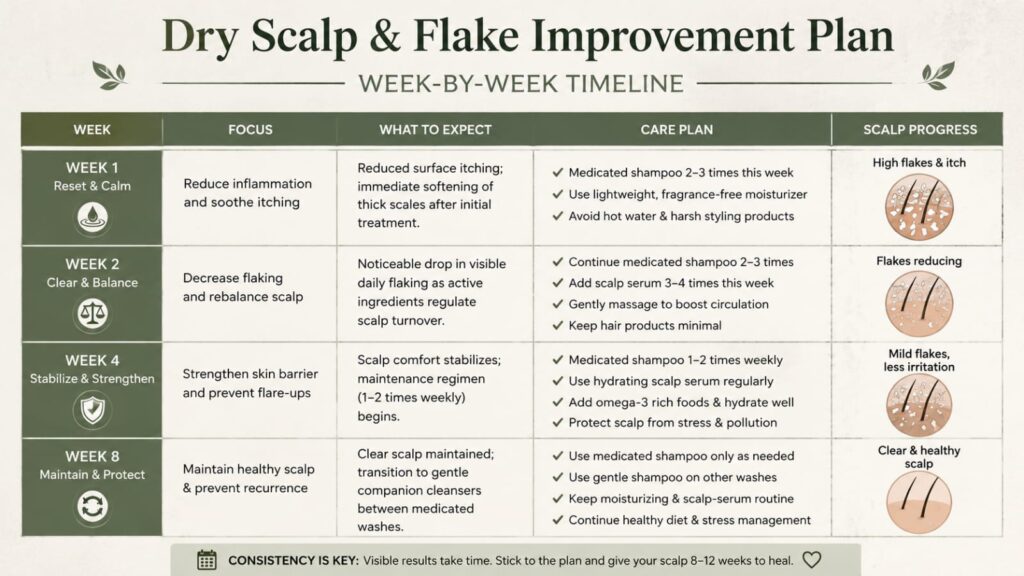
| Timeline | Expected Scalp & Flake Progress |
| Week 1 | Reduced surface itching; immediate softening of thick scales after initial treatment. |
| Week 2 | Noticeable drop in visible daily flaking as active ingredients regulate scalp turnover. |
| Week 4 | Scalp comfort stabilizes; maintenance regimen (1–2 times weekly) begins. |
| Week 8 | Clear scalp maintained; transition to gentle companion cleansers between medicated washes. |
Frequently Asked Questions
Is a dry scalp the same thing as dandruff?
No. Simple dry scalp stems from barrier disruption and dehydration, producing tiny dry specks. Dandruff is linked to oil production and Malassezia yeast, producing larger, itchy, oily flakes.
Should I use an anti-dandruff shampoo every day?
No. Most medicated shampoos should be used 2–3 times per week initially, then reduced to once weekly for maintenance once flaking is controlled.
Can I use conditioner if I have a flaky scalp?
Yes, but apply conditioner primarily to the mid-lengths and ends of your hair. Avoid massaging heavy conditioners directly into the scalp unless formulated specifically for scalp use.
Next Steps for Scalp Relief
If you are unsure whether your scalp is purely dehydrated or dealing with dandruff, start by swapping your regular shampoo for a barrier-safe, hydrating active like pyrithione zinc. Focus every wash directly on the scalp tissue, allow the lather to sit for at least three minutes, and evaluate your progress after two weeks.
Explore More Articles on Scalp Health :-